Beckwith-Wiedemann Syndrome: Symptoms, Causes, Diagnosis, and Treatment
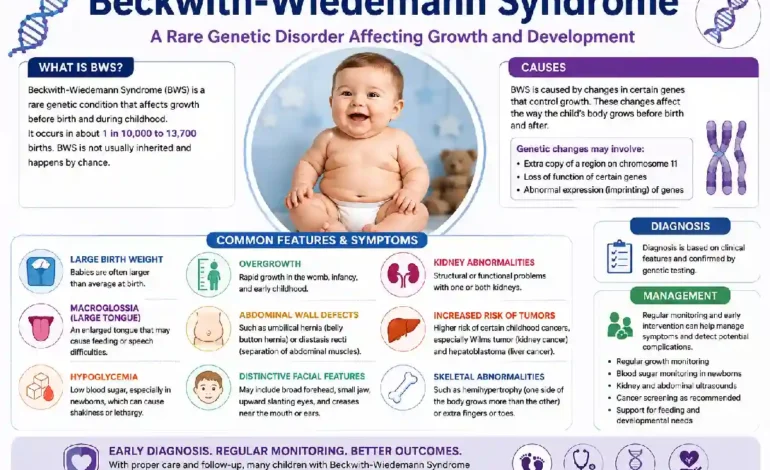
Beckwith-Wiedemann syndrome (BWS) is a rare genetic overgrowth condition that is commonly seen in children. This syndrome is distinguished by excessive growth in specific parts of the body, such as, but not limited to, macroglossia, abdominal wall problems, high birth weight, and a tendency to have childhood cancers.
The syndrome is very different among the children with it. While there are people who present with different signs of BWS, others present with mild signs of it.
What Is Beckwith-Wiedemann Syndrome?
Beckwith-Wiedemann syndrome is a genomic imprinting condition associated with abnormalities in the particular region of chromosome 11, 11p15.5. This region is said to include specific genes that govern growth.
The mechanisms behind the genetics of the condition are very complicated and are usually associated with growth regulation. It should be remembered that all the children with BWS are genetically identical.
Why Tumor Screening Is Important
Kids with BWS will require ongoing screening intended to detect certain types of tumors in their earliest stages of development.
Surveillance may include various tests depending on the age of the patient and their individual risk.
A doctor may recommend the following tests:
- Abdominal ultrasound examinations at regular intervals
- Blood tests for alpha-fetoprotein (AFP) in early childhood if required
There are differences in the recommendations based on the type of molecular diagnosis that was found in the particular patient.
Parents need to adhere to the surveillance program that is recommended by their child’s specialist and not rely on generic information provided online.
Common Symptoms of Beckwith-Wiedemann Syndrome
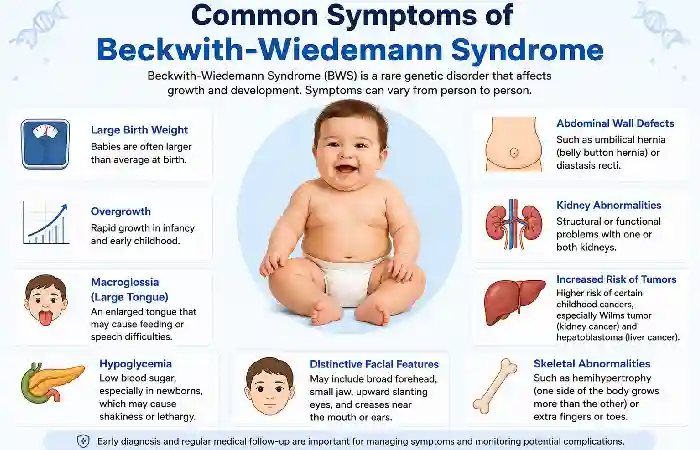
BWS can be identified before birth, at birth, and during childhood.
The signs of BWS may include:
- Increased birth weight or length
- Increased growth in childhood
- Macroglossia (enlarged tongue)
- Defects in abdominal wall
- Omphalocele
- Umbilical hernia
- Increased size of abdominal organs
- Asymmetric body and limb growth
- Ear creases and/or ear pits
- Neonatal hypoglycemia
Not every child has to have all those symptoms.
Macroglossia
One of the features of Beckwith-Wiedemann syndrome is macroglossia (enlarged tongue).
The enlarged tongue may cause difficulties with:
- Feeding
- Breathing
- Speech development
- Sleeping
- Dental development
In that case, special interventions will be recommended to reduce the tongue size and treat complications.
Abdominal wall defects
Some BWS patients may have abnormalities of the abdominal wall.
For example, it may be an omphalocele, when internal organs protrude through the navel opening and are covered with a membrane.
Some patients may have umbilical hernias or other abnormalities.
The right treatment may depend on the size of the defect and the overall health of the patient.
Neonatal hypoglycemia
The next complication of BWS is neonatal hypoglycemia (low glucose levels in the blood) after birth.
Some BWS children may produce too much insulin, which causes lowered glucose levels in the blood.
Untreated severe and long-term hypoglycemia may cause damage to brain tissue.
This is why monitoring glucose levels is important.
Asymmetric growth
Sometimes asymmetric overgrowth may occur in children with BWS. It means that one part of the body grows more than the other.
It may happen in such areas as:
- Arms
- Legs
- Hands
- Feet
- Face
- Other parts of the body
The difference between the sizes increases over time.
Experts will have to monitor the growth and development of the child.
Increased risk of tumors
The major medical issue connected with BWS is the increased risk of developing certain types of childhood cancer.
Such types of tumors are:
- Wilms tumor (kidney cancer)
- Hepatoblastoma (liver cancer)
The risk varies depending on the subtype of BWS.
That is why tumor surveillance in childhood is necessary for patients with BWS.
Causes of Beckwith-Wiedemann Syndrome
BWS is caused by chromosomal abnormalities in the genes and regulatory regions of chromosome 11.
The disease is characterized by genomic imprinting, i.e., differential expression of certain genes depending on the parent from whom the chromosome was inherited.
Alterations in chromosome 11p15 can affect the normal regulation of growth.
The following molecular mechanisms lead to the development of the disorder:
- Loss of methylation
- Gain of methylation
- Paternal uniparental disomy
- Variants in the CDKN1C gene
- Chromosomal aberrations
Since different molecular mechanisms lead to the development of the BWS phenotype, it may be beneficial to conduct genetic testing in order to diagnose the disease.
Is Beckwith-Wiedemann Syndrome Inherited?
There are several modes of inheritance of BWS.
Most often, the syndrome occurs sporadically, and there is no familial history.
However, sometimes the syndrome is heritable. It may be associated with certain alterations in the CDKN1C gene.
Genetic counseling may provide parents with the following information:
- Specific genetic findings in the family
- The possibility of BWS in other family members
- The risk of developing BWS in another pregnancy
- Testing options for the disease
How Is Beckwith-Wiedemann Syndrome Diagnosed?
In most cases, diagnosis involves physical characteristics, the patient’s history, and genetic testing.
The physician may examine the following characteristics of the patient:
- Birth weight and growth
- Size of the tongue
- Abdominal wall abnormalities
- Body asymmetry
- Ear features
- Hypoglycemia
- Family history
Molecular testing allows detection of abnormalities in chromosome 11p15.
However, a negative result of genetic testing does not exclude the diagnosis because not all the molecular changes can be detected by this test.
Treatment for Beckwith-Wiedemann Syndrome
Currently, there is no cure for BWS. It depends on symptoms and possible complications that can occur in children.
Treatment requires many specialists.
Treatment of Low Blood Sugar
Children with hypoglycemia require diagnosis and treatment that will normalize the glucose levels.
Persistent hyperinsulinism should be specially evaluated and treated.
Treatment of Abdominal Wall Issues
Serious omphaloceles and other complications of the abdomen require surgery.
Treatment of Macroglossia
When a large tongue interferes with breathing, eating, speech, or dental problems, doctors consider surgery to reduce its size.
Treatment of Lateralized Overgrowth
Lateralized overgrowth requires monitoring, which can be done by pediatricians, orthopedic surgeons, and other specialists.
Tumor Surveillance
Monitoring of patients helps detect certain tumors in childhood that can be successfully treated if diagnosed at early stages.
Living with Beckwith-Wiedemann Syndrome
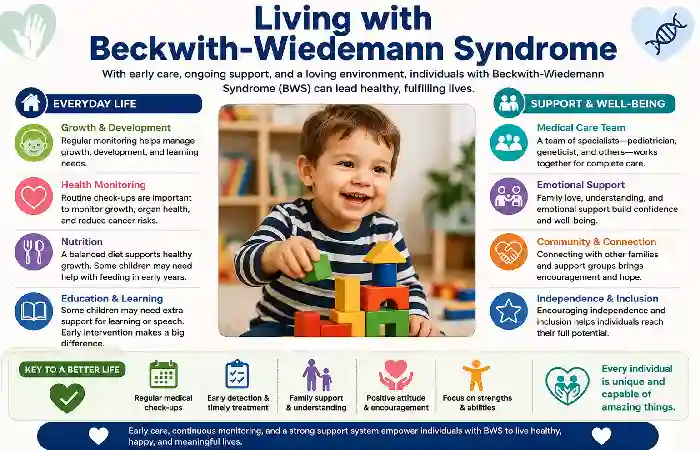
Many patients with BWS develop normally if they receive appropriate medical treatment.
Treatment requires regular monitoring in early years, and less frequent follow-ups when the risk of tumors decreases.
Care will need to be provided by:
- pediatricians;
- geneticists;
- endocrinologists;
- oncologists;
- surgeons;
- dentists;
- physicians specialized in speech;
and other health specialists depending on the individual case.
The treatment regimen depends on the particular case.
Beckwith-Wiedemann Syndrome and Childhood Development
BWS itself does not cause intellectual disabilities. Many children develop normally from the intellectual standpoint.
However, any complications like serious neonatal hypoglycemia can interfere with neurodevelopment if not diagnosed and treated in time.
Children with developmental delays should be evaluated and assisted if required.
Pregnancy and Beckwith-Wiedemann Syndrome
Some features of BWS can diagnose during fetal imaging.
They can include:
- overgrowth of the fetus
- enlargement of internal organs in fetuses
- developmental abnormalities of the abdominal wall
- excessive fluid around the fetus in some cases
Families with a history of BWS should consult a geneticist before or during pregnancy.
When Should Parents Seek Medical Advice?
In case your child has features that may associate with BWS, you need to tell a health care professional about your child if they have:
- Developmental disorders (large growth)
- Macroglossia
- Defects of the abdominal wall
- Hypoglycemia
- Inequality in the development of different body organs
- BWS in the family
A pediatrician or a geneticist will be able to clarify whether additional examinations are necessary.
Frequently Asked Questions
Is Beckwith-Wiedemann Syndrome rare?
Yes. BWS is a rare genetic syndrome.
Is Beckwith-Wiedemann Syndrome cancer?
No. BWS is an overgrowth syndrome. However, patients with BWS have an increased risk of developing certain types of cancers, like Wilms tumors and hepatoblastoma.
Is Beckwith-Wiedemann Syndrome curable?
Unfortunately, there is no treatment for BWS. BWS patients receive treatment for symptoms and complications.
Does BWS affect intelligence?
BWS does not cause intellectual disabilities. But sometimes severe neonatal hypoglycemia can result in neurological disorders.
Can adults have BWS?
BWS is diagnosed in early childhood or infancy. It is hard to diagnose the signs of overgrowth syndrome in many adults, but certain physical differences and complications remain.
Can Beckwith-Wiedemann Syndrome inherit?
Sometimes BWS is inherit. There are also cases when BWS develops spontaneously. Genetic counseling will help to establish the way of inheriting BWS in your family.
Conclusion
Beckwith-Wiedemann Syndrome is a rare genetic overgrowth syndrome, which includes gene regulation disorders that impact growth processes and are found on chromosome 11. The most common symptoms of BWS include macroglossia, excess growth, abdominal wall defects, inequality, and neonatal hypoglycemia.
Prevention and observation of possible complications are the most important aspects in BWS treatment. Proper diagnosis, genetic tests, and medical observation will help to manage the problem.
Since the course of BWS is individual for each patient, parents need to consult a healthcare professional for further actions.