Niva Bupa Health Insurance: Plans, Benefits, Coverage and Claims Guide
Health insurance can help one deal with financial expenses regarding healthcare services. Considering that the expenses involved in getting hospitalized, diagnostics, medications, and other healthcare services are quite significant, good insurance will give you financial security.
Niva Bupa Health Insurance refers to health insurance plans and services offered by Niva Bupa Health Insurance Company Limited in India. The company provides various health insurance plans for individuals and families, including hospitalization and other healthcare benefits according to the selected plan.
What Is Niva Bupa Health Insurance?
Niva Bupa is a health insurance provider in India. The insurance products of the company are meant to provide customers with financial coverage for their medical expenses according to the terms and conditions, limitations, and exclusions of each particular policy.
Different policies can vary due to the following factors:
- Age
- The number of insured people
- Sum insured
- The type of the policy
- The location
- The requirements for the coverage
- The selected benefits
The customers should always check the current policy wording before buying the plan.
Why Health Insurance Is Important
Medical expenses can be quite unexpected. Even routine hospitalization can become rather expensive depending on the treatment and the hospital.
Health insurance can help one reduce the financial expenses associated with eligible expenses.
Common reasons why people choose health insurance include:
- Hospitalization coverage
- Family financial security
- Access to cashless treatment in eligible hospitals
- Medical procedure coverage
- Protection from unexpected health situations
And many more.
Types of Health Insurance Plans
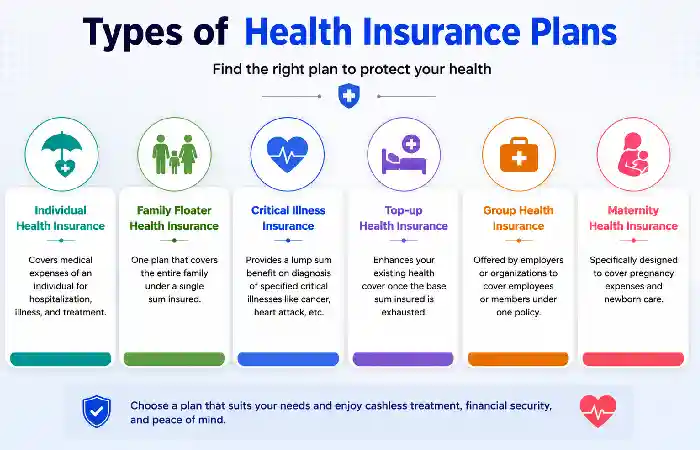
Health insurance providers generally offer different products to meet different needs.
| Plan Type | Typical Purpose |
| Individual Health Insurance | Coverage for one insured person |
| Family Floater | Shared coverage for family members |
| Senior Citizen Plans | Healthcare protection for older adults |
| Critical Illness Plans | Coverage for specified serious illnesses |
| Top-Up Plans | Additional protection above a deductible |
| Super Top-Up | Additional coverage based on cumulative eligible expenses |
Sum Insured
The sum insured plays a crucial role in a health insurance policy.
It refers to the maximum payable amount by the insurer for claims under the applicable policy within a certain period, subject to policy conditions and terms.
When choosing a plan, consider:
- Age of the insured
- Number of family members
- Existing coverages
- Local cost of healthcare
- Expenses due to hospitalization
- Long-term financial needs
Choosing the right sum insured is much more important than just choosing the lowest premium.
Hospitalization Cover
Many health insurance policies have provisions for eligible expenses for hospitalization.
Based on the plan, eligible expenses may include specific costs for:
- Hospital room charges
- Doctor fees
- Nursing
- Medicines
- Diagnostic test costs
- Surgical procedures
However, it varies according to the policy. The customers have to verify policy wording regarding limits, exclusions, deductibles, co-payments, and waiting periods.
Cashless Treatment
Cashless hospitalization may make the process of claim settlement easy.
In case the treatment is taken at a network hospital and the claim is approved as per the policy, the insurer may make payment for eligible expenses directly to the hospital, subject to applicable terms.
The customers will still have to pay for the expenses that are not covered by the policy.
Prior to planned hospitalization, one must ensure:
- The hospital is part of the insurer’s network.
- Whether a cashless treatment facility is provided.
- The need for pre-authorization.
- Required documents.
Reimbursement Claims
A reimbursement claim may be made in case eligible expenses are incurred by the policyholder, and the claim is made to the insurer.
The process usually includes:
- Treatment
- Collection of medical documents
- Covered hospital expenses
- Filing of the claim
- Submission of required documentation
- Evaluation of the claim
The claim will then be evaluated based on the policy terms.
Waiting Period
Health insurance policies may contain waiting periods.
Certain ailments or treatments may not be covered immediately when the policy is bought.
Waiting periods may differ depending upon the policy and nature of ailment.
Before taking health insurance, ensure:
- Initial waiting period
- Pre-existing disease waiting period
- Waiting period for specific diseases
- Maternal waiting period, wherever applicable
Pre-Existing Diseases
A pre-existing disease is a medical condition that existed before the policy began, subject to the insurer’s applicable definition.
Insurance policies may apply specific waiting periods or conditions to pre-existing diseases.
Applicants should provide accurate information when purchasing insurance. Failure to disclose relevant information can create problems during claim assessment.
Policy Exclusions
Health insurance doesn’t necessarily cover every medical expense.
Common exclusions or limitations may involve the following:
- Cosmetic procedures
- Non-medical expenses
- Treatments specifically excluded by the policy
- Experimental procedures
- Self-inflicted injuries in applicable circumstances
- Expenses outside policy conditions
The exact exclusions depend on the selected policy.
Premiums
The premium is the amount paid to maintain insurance coverage.
Premiums can vary based on:
| Factor | Potential Impact |
| Age | Older applicants may have higher premiums. |
| Coverage | Higher coverage can affect premiums. |
| Family size | More insured members can affect cost. |
| Location | Healthcare costs can vary. |
| Medical history | Underwriting may affect pricing. |
| Add-ons | Additional benefits can increase premium. |
The lowest premium isn’t always the best choice. Coverage, exclusions, limits, and claim conditions should also be evaluated.
Benefits in Case of No Claim
Some health insurance products may have benefits for policyholders without claims based on the type of policy.
These benefits can increase the coverage, among other things.
Customers should refer to the terms of the specific product instead of believing that all health insurance products have the same no-claim benefit.
Renewal of Health Insurance
Health insurance is usually meant to provide continuous cover through renewals of the policy.
Policyholders should:
- Renew before the due date
- Analyze the coverage annually
- Check whether there are changes in the requirements of the family
- Analyze the terms of the policy
- Consider whether the sum insured is adequate
Continuous cover is also important in cases where waiting period and continuity benefits exist.
Typical Documents Used in Claims
Claim documents can differ based on the treatment and policy.
The documents used could include the following:
- The claim form
- Hospital bills
- Discharge form
- Medical reports
- Prescriptions
- Diagnostic reports
- Identification documents
- Bank details (if necessary)
The insurance company may ask for more documents during the claims assessment process.
How to Choose a Health Insurance Policy
In choosing a health insurance policy, compare more than just the premium.
- Coverage
Determine the medical expenses covered.
↓
- Sum Insured
Choose the appropriate amount.
↓
- Network Hospitals
Check whether the preferred hospitals are in the network.
↓
- Waiting Periods
Analyze the waiting periods for pre-existing diseases and specified treatments.
↓
- Exclusions
Analyze the exclusions.
↓
- Co-Payment
Check whether there is a co-payment for the expenses that qualify.
↓
- Room-Rent Limits
Check whether there are limits on the categories of rooms.
Niva Bupa Health Insurance Cashless Hospital Network
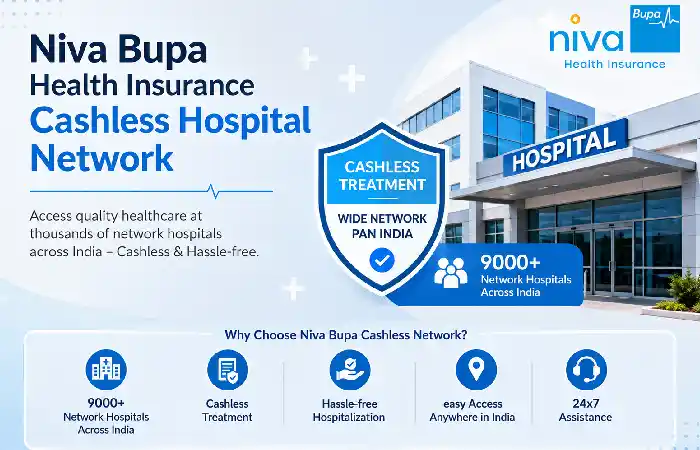
| Feature | Details |
| Cashless Treatment | Allows eligible policyholders to receive treatment without paying the full hospital bill upfront. |
| Network Hospitals | Treatment is available at hospitals partnered with Niva Bupa, subject to policy terms. |
| Hospital Search | Policyholders can check the insurer’s network hospital list by city or location. |
| Pre-Authorization | Cashless hospitalization generally requires approval from the insurer or its claims team. |
| Emergency Treatment | In emergencies, policyholders should inform Niva Bupa as soon as possible and follow the claim procedure. |
| Important Note | Coverage, exclusions, room-rent limits, and other conditions depend on the specific policy. |
Health Insurance for Families
Family floater policies might be considered due to the fact that a single sum assured can cover all family members.
The things a family needs to consider include:
- The number of family members
- Their ages
- Medical conditions
- Sum assured
- Hospitalization preferences
- The need for future medical services
Whether a floater or individual insurance policy would work better depends on particular circumstances.
Health Insurance Policies for Senior Citizens
Senior citizens usually require additional healthcare measures which may cost a lot, so it is crucial to have appropriate insurance.
Some factors you should compare while choosing health insurance for seniors include:
- The age of entry into the policy
- Conditions of renewal
- Waiting periods
- Co-payment
- Limitations
- Conditions concerning pre-existing diseases
- The list of network hospitals
It is necessary to thoroughly check the terms and conditions of the policy before making a purchase.
Importance of Studying the Policy Document
The information on marketing pages is general, but the information in the policy document is more detailed.
While purchasing Niva Bupa health insurance, you should pay attention to such points as:
- Benefits
- Limitations
- Exclusions
- Waiting periods
- Deductibles
- Co-payment
- Conditions of renewal
- The procedure of filing claims
If some clause is not clear to you, then you should contact the insurance company or its representatives.
Frequently Asked Questions
What is Niva Bupa health insurance?
Niva Bupa health insurance refers to the various health insurance plans available from Niva Bupa Health Insurance Company Limited in India.
Does health insurance cover hospitalization?
Depending on the specific plan, many health insurance policies cover hospitalization charges for treatments within their scope.
What is cashless hospitalization?
Cashless hospitalization refers to the processing of eligible claims by the insurance company and the hospital, subject to certain conditions and requirements.
Does pre-existing disease get immediate coverage?
It is not always true. There may be a waiting period for such diseases under the policy.
How much health insurance should you buy?
The amount of insurance you need depends on various factors, including age, size of family, location, existing health insurance, cost of medical services, financial position, etc.
Is the most affordable health insurance policy the best one?
Being relatively affordable is just one criterion that should be taken into account. You should also consider its coverage, exclusions, waiting period, network hospitals, deductibles, and other claim conditions.
Conclusion
Depending on the particular plan, Niva Bupa health insurance may cover your eligible medical expenses. Different plans have varying benefits, exclusions, waiting periods, and claim conditions.
When choosing a health insurance policy, you should compare sums insured, premium charges, network hospitals, waiting periods, exclusions, co-payments, and claim procedure. Most importantly, read the wording of the policy carefully and give accurate information.