Osteoarthritis Self-Care: Practical Ways to Manage Joint Pain
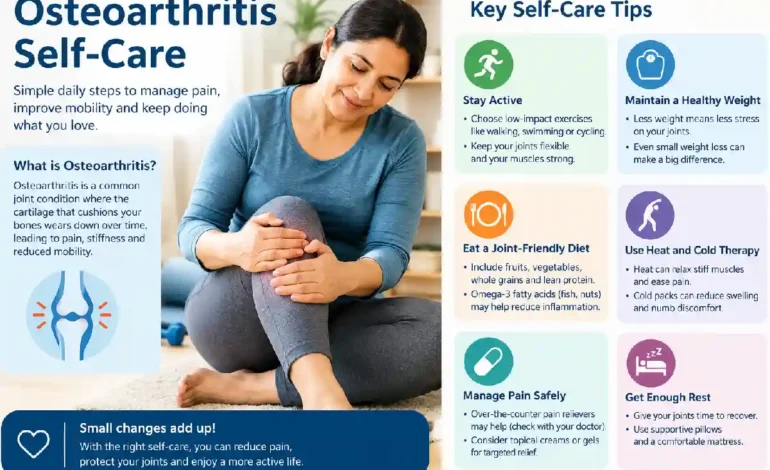
It is a disease that makes people unable to perform simple actions like walking, exercising, climbing stairs, and getting up from a chair. Osteoarthritis is a kind of disease that affects the knees, hips, hands, and other joints, causing pain, stiffness, swelling, and an inability to move.
Despite the fact that osteoarthritis is untreatable, its symptoms may be controlled by means of proper exercise, adjusting the body, controlling weight, protecting your joints, and consultation.
Proper care in the case of osteoarthritis will help you stay active and healthy.
What is Osteoarthritis?
OA is one of the most common forms of arthritis. OA appears because of changes in cartilage and other joint tissues.
The symptoms of osteoarthritis are:
- Pain and/or aching in the joint
- Stiffness, especially when at rest
- Edema in the area affected
- Limited mobility of the joint
- Unstable joint state
OA is not a normal part of the aging process. There are many risk factors for OA, including joint injury in the past, excessive strain on the joint, genetics, and being overweight.
Why Osteoarthritis Self-Care Matters
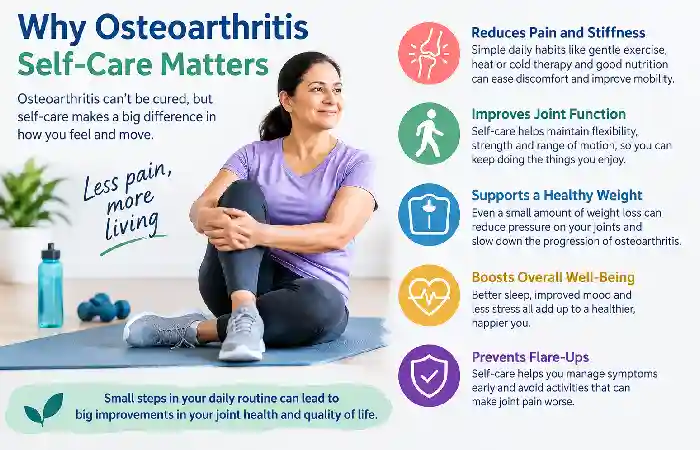
Osteoarthritis self-care does not equate to osteoarthritis management without medical care.
Rather, it involves creating certain routines to enable you to cope with your condition along with any medical intervention advised by your health provider.
A good self-management plan can help you:
- Experience less pain
- Have better mobility
- Keep your muscles strong
- Keep your weight healthy
- Conserve your joints
- Perform your daily activities
- Live a better-quality life
The CDC has highlighted that physical activity, healthy weight management, joint protection, and self-management skills are important for arthritis management.
1. Stay Physically Active
Among the best osteoarthritis self-care tips is physical activity.
Though it seems reasonable to rest an aching joint, completely avoiding all physical activities leads to weakened muscles and even more difficulties with performing your daily routine.
Physical activities friendly to your joints help you experience less pain and have improved physical functioning.
Some good ways of exercising may be:
- Walking
- Biking
- Swimming
- Water aerobics
- Tai chi
- Flexible strength training
- Adequate stretching
- Low-impact fitness classes
Start slowly if you haven’t been active before.
Even several minutes of physical activity are better than nothing. You don’t have to do the whole exercise routine at once.
2. Try Low-Impact Exercise
Just because high-impact activities are not recommended doesn’t mean that those with osteoarthritis cannot participate in them. Low-impact activities may be better for painful joints. Activities such as walking, cycling, swimming, and water exercise are considered low-impact activities.
Walking
Walking is an affordable and adaptable type of exercise.
Begin with a duration that is comfortable for you and then increase as your body adjusts to the exercise.
Swimming and Water Exercise
Water will help take up some of your weight, which may help people with joint pain.
Cycling
Whether stationary or outdoors, cycling can be used to get a cardiovascular workout without the impact of other exercises such as running.
3. Strengthen the Muscles Around the Joint
Muscles around your joints can support them and reduce pain.
Resistance training is especially helpful if you have osteoarthritis in weight-bearing joints, such as your knees or hips.
According to your ability level, exercises can include:
- Resistance band exercises
- Light weights
- Sit-to-stand
- Leg strengthening exercises
- Core exercises
- Bodyweight exercises
It doesn’t matter how much you lift. It should be enough to allow you to do the exercise without pain in the joint.
4. Begin Exercise Gradually
If you were inactive because of joint pain, don’t try to make up for this deficiency by doing a single long session of physical activity.
Instead:
- Do physical activities starting with a couple of minutes of easy exercise.
- Use exercises that cause minimal stress to your painful joint.
- Gradually increase the time spent exercising.
- If necessary, use strength training as a part of your exercise.
- Take notice of your body.
The CDC recommends that people who have arthritis strive to get 150 minutes of moderate physical activity per week plus strength training; however, it emphasizes that any exercise is better than no exercise at all.
5. Control Your Weight
Weight control might be very important in coping with osteoarthritis, especially in the case of OA in the knee and hip joints.
Healthy eating is preferable to crash diets.
Consider:
- Vegetables and fruits
- Lean protein
- Whole grains
- Beans and lentils
- High-fiber foods
- Healthy fats
- Appropriate portions
- Adequate hydration
6. Protect Your Joints
Joint protection does not imply a lack of movement.
It rather refers to the prevention of unnecessary joint stress and strain.
For instance:
- Perform proper lifting techniques.
- Take breaks when performing repetitive actions.
- Do not remain in one position for too long.
- Use supportive devices when required.
- Practice joint-friendly exercises.
- Protect yourself with proper gear while playing sports.
- Mind your past joint injuries.
Repetitive actions and joint injuries may increase the likelihood of osteoarthritis development or worsen your current condition.
7. Conduct Daily Activities in Different Ways
Some small modifications in the household may make your daily activities easier.
If your knee joints are sore while climbing the stairs, place your items in places where you can easily access them.
In case of hand osteoarthritis, use special devices for opening containers.
When you feel sore due to prolonged standing, try to rest by taking sitting breaks.
Your goal is not to give up on your routine activities. It is to perform them with less strain.
8. Pay Attention to Pain During Exercise
Pain will be inevitable while engaging in a new kind of activity, particularly if you have not been actively engaged.
Nevertheless, severe pain should be taken seriously and not ignored.
It is highly advised that you:
- Commence with easy physical activity.
- Do not progress to strenuous exercises instantly.
- Choose exercises that seem easy and comfortable.
- Do not engage in painful and uncomfortable activities.
- Stop exercising in case of severe pain and consult your physician.
According to the recommendations of the CDC, you should start slowly and consult a healthcare provider in case of pain.
9. Never Ignore Sleep
Pain and sleep are often intertwined.
Lack of sleep because of joint pain will make you feel tired throughout the day and make daily physical activities and exercises hard to do.
You should keep your sleeping routine in order:
- Get up and go to bed at regular hours.
- Maintain proper sleeping conditions.
- Minimize screen time before going to bed.
- Maintain cool and silent conditions in your room.
- Follow recommendations of your health care provider on how to deal with pain while sleeping.
In case of joint pain interfering with your sleep, you should inform your healthcare provider.
10. Manage Stress
Living with chronic pain may be very frustrating.
Pain can affect your ability to stay on track with healthy habits and have a good night’s sleep.
The activities may be as follows:
- Deep breathing
- Meditation
- Yoga
- Tai chi
- Jogging
- Relaxation techniques
- Interactions with others
- Hobbies
It is unnecessary for you to eliminate all the stressful factors from your life. You only need to learn to handle them correctly.
11. Apply Heat or Cold if Needed
Application of heat and/or cold helps to relieve temporary symptoms.
For example, you can take a warm bath or use a heating pad in case of pain in your joints.
The use of ice will help to relieve temporary pain if your joints hurt after physical activities.
Make sure that you don’t use extremes in treatment with heat or cold.
Don’t be afraid to visit your doctor for advice concerning treatment of your disease.
12. Consider Physical Therapy
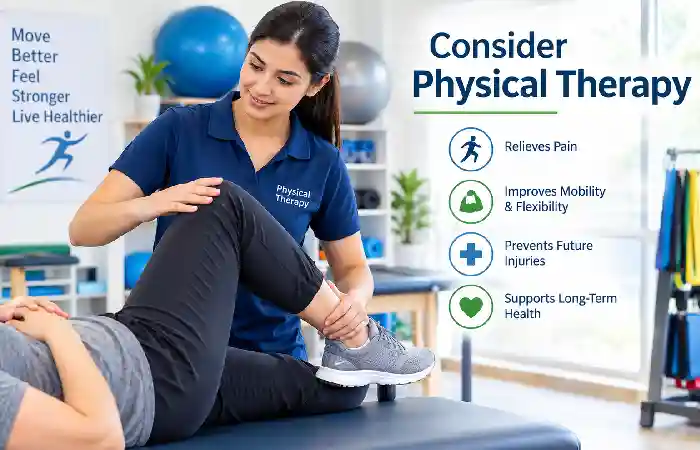
Physical therapy may be able to teach you proper movement techniques to enhance your strength and mobility.
A customized physical therapy program may include:
- Resistance exercises
- Mobility exercises
- Balance exercises
- Gait exercises
- Conducting activity modification recommendations
- Recommendations for exercise at home
According to the CDC, physical therapy may be used to build up muscles in and around the joints that are affected to manage osteoarthritis.
13. Learn Self-Management Skills
The final essential element in osteoarthritis self-care is education.
Arthritis self-management courses recommended by the CDC can help patients acquire skills to cope with symptoms, maintain healthy lifestyle habits, and improve their self-confidence in self-care.
Arthritis self-management courses may involve the following topics:
- Pain management
- Physical exercise
- Nutrition
- Self-management
- Health communication
- Problem-solving
- Behavior change
Coping with OA is almost as important as learning about treatment methods.
14. Take Medications Only as Recommended
Both over-the-counter medications and prescriptions could be used in the treatment of OA.
However, drugs are not always necessary and appropriate for everyone.
Some painkillers may have side effects or can be contraindicated for patients with particular health conditions.
Rather than taking painkillers continuously without advice, discuss your symptoms and treatment with your doctor.
15. Use Assistive Devices If Necessary
At times, some people suffering from osteoarthritis need to use assistive devices.
Depending on the joint that is affected, the following devices could be useful:
- Canes
- Braces
- Orthotics
- Walking aid devices
- Adaptive aids
According to the CDC, canes and crutches could be an option for some adults who suffer from osteoarthritis.
Your doctor will help you choose the right device and show you how to use it.
What Should Be Avoided in Osteoarthritis?
There is no particular list of physical activities that should be avoided by all people with OA.
However, avoid:
- Increasing the intensity of physical activity suddenly
- Taking part in physical activities with pain
- Ignoring swelling
- Movement that irritates your symptoms repeatedly
- Staying inactive for a long time
- Starving
- Taking supplements instead of proper treatment
Final Thoughts
A person with arthritis needs to do as much physical and mental work as possible, but within the limits of their body.
Physical activity, weight-lifting exercises, proper nutrition, obesity therapy, joint care, proper sleep, and stress therapy will be useful during the performance of routine activities.
You don’t need to do all of them at once; start with one or two and continue slowly.
In case of constant pain, severe pain, or inability to perform usual activities, it is better to visit your doctor instead of dealing with the whole situation on your own. It is quite possible to be active and do what you want despite osteoarthritis.