GLP-1 Alternatives for Weight Loss: Options, Benefits & What to Know

GLP-1 drugs have become widely used for weight loss today. Yet, they may be ineffective for some patients due to side effects, medical conditions, reluctance towards injections, inability to pay, or simply the preference for a different therapy option.
This is why so many people have turned to GLP-1 alternatives for weight loss.
And the best part is that weight management does not only involve one class of medications. Depending on one’s medical condition, goal, prescribed medications, and personal medical history, possible approaches to weight management may involve prescription weight loss medications, over-the-counter treatments, nutrition and exercise plans, behavioral therapies, medical devices, and even bariatric surgery.
Also, it should be noted that there are popular GLP-1 alternatives that are not alternatives at all. There are several new drugs based on the GLP-1 pathway and drugs that combine the GLP-1 pathway with another hormonal pathway.
What Are GLP-1 Alternatives?
GLP-1 alternatives are medications or approaches that can help with weight management without the use of GLP-1 receptor agonists.
These include the following:
- Non-GLP-1 prescription drugs
- Weight loss over-the-counter drugs
- Nutritional or calorie control
- Exercise
- Behavioral modification programs for weight loss
- Medical devices
- Bariatric surgery
It depends on the individual, rather than choosing a weight-loss drug that ensures fast weight loss.
Why Consider an Alternative to GLP-1 Drugs for Weight Loss?
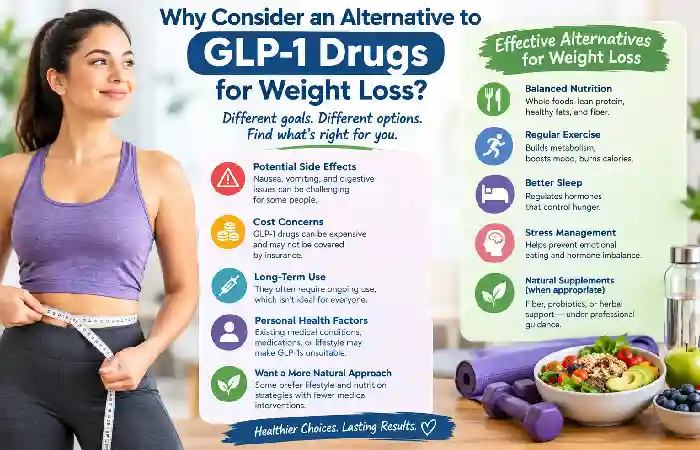
GLP-1 drugs may work effectively, but there are some reasons to consider an alternative weight loss method.
Side Effects
Some patients experience side effects such as nausea, vomiting, diarrhea, constipation, and abdominal pain.
Cost and Insurance
Prescription weight loss drugs may be expensive when insurance does not cover the costs.
Preference for Oral Drug or Non-Drug Therapy
Many GLP-1 drugs are administered via injections, and some individuals may prefer an oral drug or a non-drug treatment method.
Medical Reasons
Individuals’ health status, medications, pregnancy, or other reasons may make some weight loss treatments unsuitable.
Personal Choice
Some individuals may want to focus on nutrition, exercise, behavioral programs, or other methods of weight loss.
Non-GLP-1 Prescription Weight-Loss Medications
However, there are other prescription drugs for weight loss that do not act via GLP-1.
Orlistat
Orlistat does not act like GLP-1 drugs. Unlike GLP-1 drugs, it does not affect appetite hormones but rather limits the absorption of dietary fats by the body.
The approved OTC drug, Alli (60 mg orlistat), is available to overweight adults, and it needs to be used together with reduced-calorie, low-fat diets. There is also a prescription form called Xenical.
One thing that needs to be noted about orlistat is that it has some gastrointestinal side effects. Also, in 2026, the FDA issued a warning about potential renal side effects of Alli, especially in patients with a history of kidney diseases or kidney stones.
Phentermine/Topiramate
Phentermine/topiramate is another prescription medication for weight loss.
It is a combination of two drugs, each having a different effect on appetite and food consumption.
It is not appropriate for everyone because of its contraindications and interactions with other medications.
Naltrexone/Bupropion
Naltrexone/bupropion is a drug combination that works with both the pathways involved in appetite and eating as a source of reward.
The treatment may work for some individuals who suffer from obesity or overweight, yet the contraindications associated with the medication are rather serious.
Phentermine
Phentermine is an appetite suppressant that is traditionally used to reduce weight in the short term. The medicine does not correspond to GLP-1 therapy and is not applicable to all patients depending on their medical state and other medications taken.
How Do Non-GLP-1 Medications Compare?
There isn’t one medication that is best for everyone.
| Option | Main Approach | GLP-1 Based? | Common Consideration |
| Orlistat | Reduces fat absorption | No | Gastrointestinal effects |
| Phentermine | Appetite suppression | No | Not intended for everyone or every duration |
| Phentermine/topiramate | Appetite and food-intake effects | No | Requires medical screening |
| Naltrexone/bupropion | Appetite/reward pathways | No | Has important contraindications |
| GLP-1 medicines | Appetite, satiety, and metabolic effects | Yes | GI effects, cost, eligibility |
Diet-Based Alternatives to GLP-1 Medication
Medication is not the only way to achieve the conditions needed to lose weight.
By following an appropriate diet, one will be able to reduce the number of calories eaten while getting enough nutrition.
The diet should include such foods as:
- Proteins
- Vegetables
- Fruits
- Grains
- Legumes
- High-fiber food
- Fats
Instead of eliminating entire categories of food, most people prefer to concentrate on protein and high-fiber foods while minimizing the consumption of calorie-rich foods.
Protein Can Help With Fullness
Protein should be included in one’s diet when losing weight, as they contribute to preserving muscle mass and making a person feel full.
These are examples of such products:
- Eggs
- Greek yogurt
- Fish
- Chicken
- Low-fat meat
- Tofu
- Lentils
- Beans
- Cottage cheese
Exercise as an Alternative to GLP-1
Though exercise does not necessarily lead to considerable weight loss, it can become a part of an effective weight loss treatment program.
The combination of cardio and strength exercises would be especially useful.
Examples of Exercises
Walking
It is simple and can be progressively increased.
Strength training
Resistance training is required to retain muscles while losing weight.
Cycling
It is possible to perform cardiovascular exercises without high impact.
Swimming
This type of exercise is appropriate for people who do not prefer high-impact exercises.
Physical Activity
Nevertheless, it is not sufficient to visit the gym. Walking between workouts, using stairs, doing household chores, and avoiding sitting still are important for being physically active.
Are New Oral Weight-Loss Drugs GLP-1 Alternatives?
Terminology can be misleading here. In 2026, Foundayo (orforglipron) received FDA approval as a medication for chronic weight management among eligible adults. It is an oral drug, yet it remains a GLP-1 receptor agonist. Therefore, it might become an alternative to injectable GLP-1 medications, but not a non-GLP-1 option.
Is Tirzepatide a GLP-1 Alternative?
A person might consider tirzepatide as an alternative to GLP-1 medications due to the fact that the drug is different from GLP-1-only drugs.
Nevertheless, it should be kept in mind that it is a dual GIP and GLP-1 receptor agonist.
The FDA approved Zepbound for chronic weight management in eligible adults on a reduced-calorie diet and physical activity.
Therefore, it is evident that tirzepatide cannot be called an alternative to GLP-1 medications.
Do Not Use Non-Approved “GLP-1 Alternatives”
GLP-1 drugs’ popularity has led to the emergence of many drugs on the market promoted as “cheaper or ‘natural'” alternatives.
One should pay particular attention to:
- Shots of unknown origin
- Research chemicals
- Preparations containing GLP-1 drugs of unverified origin, which are not prescribe
- Supplements containing promises of weight loss and having a prescription strength
- Preparations claiming that they are “generic Ozempic”
- Doubtful compounded medicines
According to the FDA, the unapproved preparations of GLP-1 drugs will never approve and will not pass FDA’s evaluation of safety, efficacy, and quality before distribution.
How to Choose the Right Weight-Loss Approach

The right alternative depends on why you’re looking beyond GLP-1 medication in the first place.
| Your Situation | Options to Discuss With a Professional |
| Don’t want injections. | Oral prescription options, lifestyle treatment |
| Cost is a concern | Lifestyle program, insurance-covered options, lower-cost medications |
| Prefer non-medication treatment | Nutrition, exercise, behavioral support |
| Need substantial weight loss. | Comprehensive medical weight-management program |
| Have obesity-related conditions | Medical evaluation and individualized treatment |
| Have trouble maintaining weight loss | Long-term nutrition, activity, and behavioral support |
| Considering surgery | Bariatric/metabolic surgery evaluation |
How to Lose Weight Without GLP-1 Medication
The plan without GLP-1 medicine is still manageable.
Firstly, establish reasonable goals for caloric intake rather than extremely limited ones.
Build your meals with proteins, vegetables, fruits, whole-grain foods, and other low-processed products.
Make strength and cardio training part of your routine.
Pay attention to sleep and stress management.
Evaluate your results not only through weight control, but by measuring your waist circumference, physical abilities, and overall health status.
The main point is to choose sustainable approaches.
When Should You Talk to a Doctor?
Consulting with a doctor is highly recommended if:
- Obesity or excessive body weight is present
- Diabetes or prediabetes is diagnosed
- Hypertension is diagnoses
- Hypercholesterolemia is present
- Sleep apnea is diagnosed
- Medicines that influence weight gain are taken
- Eating disorders are present
- Weight regain was experienced several times
- Prescription medicine is considered to lose weight
- Pregnancy is present, pregnancy is planned, or you breastfeed
Final Thought
Alternatives to GLP-1 for weight loss are plenty, and selection of the proper one will depend on the reason for the choice.
Medications that are not GLP-1, such as orlistat, phentermine/topiramate, or naltrexone/bupropion, may be beneficial for certain people. In addition, nutrition, exercise, behavior therapy, medical devices, or bariatric surgery may be a part of your plan.
Moreover, it is important to distinguish GLP-1 alternatives from misleading marketing. Medications like tirzepatide or new drugs such as orforglipron are different from previous GLP-1 medications; however, their mechanisms of action are associate with GLP-1.
Do not replace your prescribed medicine with online supplements or any other products not approved by the FDA when changing or avoiding GLP-1 treatment. Consult your physician about the options.