Garmin Forerunner 265 Guide: Features, Metrics, and Training Value
Understanding Modern Running Watches
Running technology has undergone a quiet revolution over the past decade. Where athletes once relied on basic digital stopwatches or bulky GPS receivers that took minutes to locate a satellite signal, today’s sports watches function as comprehensive physiological training centers on your wrist. Finding the right balance between display crispness, tracking accuracy, and actionable biometric feedback isn’t always easy, but the garmin forerunner 265 strikes a compelling middle ground that appeals to dedicated road runners, triathletes, and weekend endurance enthusiasts alike. Rather than cluttering your wrist with superficial notifications that distract from your session, it focuses on delivering data that actively helps you run faster, recover smarter, and minimize injury risks.
As wearable screens have evolved from dull grey displays to rich, full-color panels, mid-tier training devices now boast features that used to be exclusive to expensive flagship watches. Understanding how to interpret and apply the biometric data these devices harvest is essential for building a consistent, sustainable routine. Whether you are building base miles for your first 10K or fine-tuning your pacing strategy for an upcoming marathon, learning how to put your gear’s metrics to work can transform your daily workout habits.
What Makes the Garmin Forerunner 265 Stand Out?
When selecting a dedicated fitness watch, physical usability matters just as much as background software algorithms. If a device feels awkward during high-intensity track sessions or becomes unreadable under bright midday glare, all the advanced metrics in the world won’t keep it from collecting dust on your nightstand. The design choices behind the garmin forerunner 265 reflect clear feedback from everyday runners who need absolute reliability in all outdoor conditions.
Bright AMOLED Display and Touchscreen Functionality
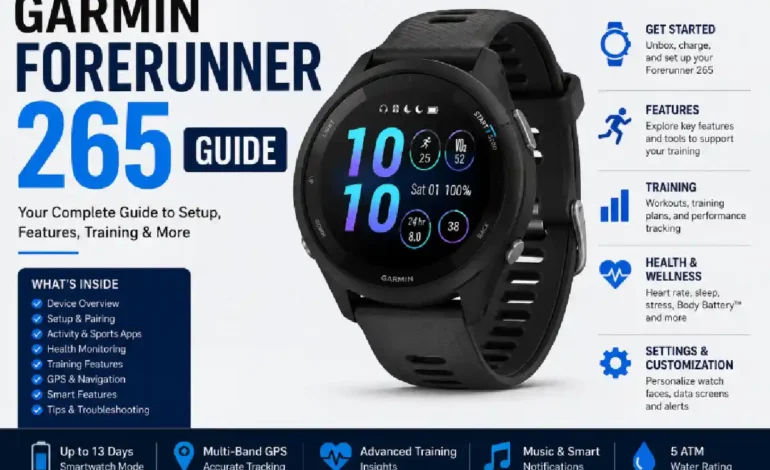
The headline hardware upgrade on this model is its vibrant AMOLED screen. Older memory-in-pixel displays were widely praised for outdoor sunlight readability and low power draw, but they often appeared dim, flat, and muted indoors or under grey overcast skies. The high-contrast AMOLED screen on the garmin forerunner 265 flips that dynamic completely, serving up punchy colors and crisp text that make glancing down at your split times mid-stride effortless.
Garmin wisely retained physical push-buttons alongside the touchscreen interface. This dual-control setup gives you the best of both worlds: intuitive swiping for skimming through daily wellness widgets, paired with tactile side buttons for immediate responsiveness during workouts. When your hands are sweaty, or when you’re running through heavy rain in thick winter gloves, physical push-buttons remain the most reliable way to pause workouts, mark manual laps, or switch data pages on the fly.
Sizing Options and Ergonomic Design
Achieving a proper fit is about far more than basic wrist comfort; it directly determines the accuracy of optical heart rate readings. An ill-fitting case allows light to leak into the optical sensor cluster on the back panel, causing erratic heart rate spikes or dropped readings. To accommodate different wrist profiles, the watch is offered in two distinct sizes: the standard 46mm case and the smaller 42mm variant, designated as the 265S.
Both models feature lightweight reinforced polymer bezels and flexible silicone bands designed to hug the wrist securely. Weighing under 50 grams, neither version produces noticeable drag or bounce during high-cadence strides, hill repeats, or long distance runs.
Deep Dive into Core Training and Performance Metrics
Collecting thousands of physiological data points throughout the day is only valuable if that information translates into sensible training decisions. The primary strength of the garmin forerunner 265 is its ability to synthesize heart rate, sleep patterns, and recent training stress into clear, digestible guidance.
Training Readiness and the Morning Report
One of the most practical tools for daily planning is the Training Readiness score. Rather than focusing on a single metric in isolation, it aggregates several key biometric indicators into a unified score scaled from 1 to 100:
- Sleep History: Tracks the overall duration and restorative quality of your recent sleep cycles.
- Recovery Time: Calculates how many hours your body needs to rest before undertaking another high-intensity effort.
- HRV Status: Evaluates overnight heart rate variability trends against your established baseline.
- Acute Load: Balances your short-term physical exertion against your long-term athletic capacity.
Every morning when you wake up, the watch displays a customized Morning Report right on your screen. This digest details your readiness score alongside the day’s local weather forecast, suggested workout intensity, and recovery status, giving you immediate clarity on whether to charge ahead with an interval session or take an easy recovery day.
Heart Rate Variability (HRV) Status Explained
Heart rate variability measures the tiny micro-second fluctuations in time between successive heartbeats. Higher variability generally indicates that your nervous system is responsive, relaxed, and well-recovered, whereas lower variability often points to lingering physical stress, illness, poor sleep, or impending overtraining.
By measuring overnight HRV consistently over several weeks, the device establishes a personal baseline unique to your body. Tracking these long-term trends helps you catch fatigue early, allowing you to adjust your workout plan before minor aches develop into actual injuries.
Wrist-Based Running Dynamics and Power
In past gear generations, capturing detailed biomechanical data required clipping an external pod onto your waistband or wearing a chest strap sensor. Built-in sensors on the garmin forerunner 265 handle these calculations directly from your wrist, eliminating extra hardware entirely.
Key metrics calculated natively during your runs include:
- Cadence: Total steps per minute, helping you refine your stride efficiency.
- Ground Contact Time: The exact duration in milliseconds your foot stays planted on the pavement during each step.
- Vertical Oscillation: The amount of vertical bounce in your running gait.
- Running Power: Measured continuously in watts, offering an accurate measurement of your actual work rate that adjusts immediately for steep hill climbs and headwinds.
Real-World Usability: Is It the Right Watch for You?
Choosing the ideal running watch comes down to matching its feature set with your specific training routines and environments. Here is a practical summary of how the garmin forerunner 265 aligns across different runner profiles:
| Runner Profile | Primary Training Need | Device Alignment |
|---|---|---|
| Casual Jogger & Fitness Enthusiast | Simple tracking of distance, pace, and burnt calories | Offers far deeper physiological insights than basic tracking requires, but provides ample room to grow into structured training. |
| Structured Marathon Runner | Targeted pacing metrics, load monitoring, and recovery guidance | Exceptionally well matched; features race predictor models, daily workout suggestions, and real-time stamina tracking. |
| Trail & Ultramarathon Runner | Multi-day battery longevity, offline maps, and rugged construction | Capable on basic non-technical trails, though dedicated outdoor models offer longer battery reserves and full topographic maps. |
| Triathlete & Multisport Athlete | Seamless sport transitions and open-water swimming stats | Includes dedicated multisport profiles, open-water swim tracking, and fast single-button transition logging. |
Practical Tips for Integrating the Watch into Your Daily Routine
To extract maximum value from your garmin forerunner 265, consider adopting a few strategic habits right out of the box:
- Establish a Consistent Sleep Baseline: Wear your device to bed every night for at least three consecutive weeks. This allows the internal software algorithms to establish an accurate personal baseline for your HRV and resting heart rate trends.
- Customise Your Workout Displays: Avoid overcrowding your main exercise screen. Set up your main display to show just three or four critical metrics—such as lap pace, current heart rate zone, distance, and lap time—so you can absorb information without losing focus.
- Use Auto-Pause Purposefully: Keep auto-pause active for urban city runs with frequent traffic stops, but turn it off during track sessions or structured tempo workouts for true elapsed time tracking.
- Track Load Ratios Weekly: Keep an eye on your acute-to-chronic load ratio in the training status widget. Keeping your volume increases gradual helps avoid sudden load spikes that lead to overuse injuries.
Battery Performance and Daily Endurance
Despite the higher energy demands of a bright AMOLED panel, battery management on the garmin forerunner 265 remains remarkably practical for everyday life. In standard smartwatch mode, you can expect up to 13 days of use on a single charge with the standard 46mm version, while the smaller 265S model can stretch up to 15 days thanks to its reduced screen area.
When tracking outdoor activities using all-systems GNSS mode without music playback, you get roughly 18 to 20 hours of continuous tracking. That provides more than enough juice to handle full marathon race days, long weekend training blocks, and a week’s worth of shorter workouts on a single charge. Enabling the always-on display mode or playing onboard music continuously via connected Bluetooth headphones will naturally draw more power, requiring a recharge every few days.
Garmin Forerunner 265 FAQ
How readable is the AMOLED screen under harsh, direct sunlight?
The integrated ambient light sensor automatically adjusts display brightness based on your surroundings. Under intense midday sunlight, the screen boosts its lumen output significantly, maintaining crisp contrast and high readability without making you squint.
Can I run with music on the Garmin Forerunner 265 without carrying my phone?
Yes. The watch includes onboard music storage capable of holding offline music files and syncing offline playlists directly from services like Spotify, Deezer, or Amazon Music. You can pair wireless Bluetooth headphones directly to the watch and leave your smartphone at home while keeping full GPS routing and audio alerts active.
How does the watch calculate daily recovery estimates?
Recovery times are calculated by processing continuous optical heart rate data, total sleep duration, overnight HRV balance, respiration rates, and the overall training impulse (TRIMP) generated during recent workouts. The software then estimates how many hours of rest your body needs before undertaking another hard physical effort.
Final Verdict: Is the Garmin Forerunner 265 Worth It?
Ultimately, the garmin forerunner 265 masterfully bridges the gap between sleek lifestyle smartwatches and serious athletic gear. Its screen brings fresh visual life to Garmin’s deep suite of performance analytics, giving you clear recovery signals, accurate workout tracking, and reliable real-world battery endurance. By paying attention to trends in your sleep quality, HRV, and acute training stress, you gain a dependable training partner that keeps you healthy, focused, and ready for your next personal best.
Related Guides
Explore more useful resources related to this topic: