How much Calories in Rice? A Complete Nutrition Guide
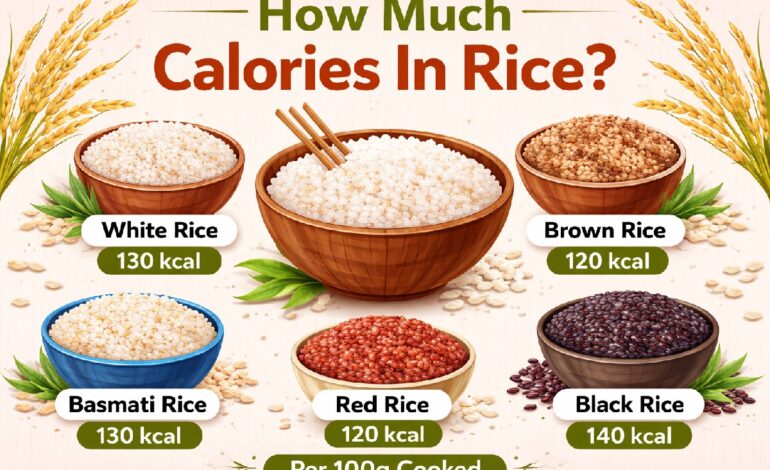
How much Calories in Rice is one of the most widely consumed staple foods worldwide, especially in countries like India, China, and many parts of Asia. Whether it’s a simple bowl of rice or a rich biryani, rice plays a key role in daily meals. But one of the most common questions people ask is: how many calories are in rice?
In this detailed guide, we’ll break down the calorie content of different types of rice, the factors that affect calories, and how to incorporate rice into a healthy diet.
What Is Rice and Why Is It So Popular?
Rice is a cereal grain that serves as a primary source of energy for billions of people. It is easy to cook, versatile, affordable, and pairs well with almost any dish. Rice is mainly composed of carbohydrates, which makes it a quick source of energy.
How Many Calories Are in Rice?
The calorie content in rice depends on the type of rice and how it is cooked. On average:
- 1 cup of cooked white rice (about 158g) contains around 200–210 calories
- 1 cup of cooked brown rice contains about 215–220 calories
While the calorie difference is small, the nutritional value varies significantly.
Types of Rice and Their Nutritional Facts
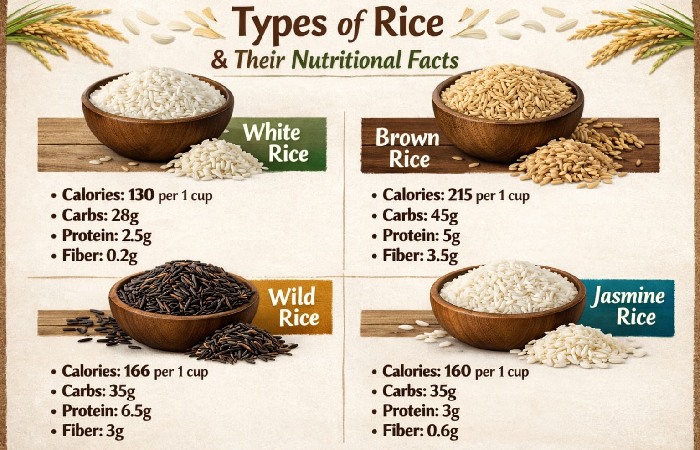
Rice comes in a wide variety of types, each offering slightly different nutritional benefits. While most rice varieties provide similar calories and carbohydrates, their fiber, vitamins, minerals, and antioxidant levels can vary significantly. Choosing the right type of rice can support better digestion, sustained energy, and overall health.
| Type of Rice | Calories | Carbohydrates | Protein | Fiber | Key Benefit |
| White Rice | 120–130 kcal | 28 g | 2–2.5 g | 0.3 g | Easy to digest, quick energy |
| Brown Rice | 110–120 kcal | 23–25 g | 2.5–3 g | 1.5–2 g | High fiber keeps you full longer. |
| Basmati Rice | 120–130 kcal | 25–28 g | 2–3 g | 0.5–1 g | Lower glycemic index |
| Jasmine Rice | ~130 kcal | 28 g | 2–3 g | 0.4 g | Soft texture and aromatic |
| Red Rice | 110–120 kcal | 23–25 g | 2–3 g | 1.5–2 g | Rich in antioxidants |
| Black Rice | 120–140 kcal | 25–28 g | 3–4 g | 2–3 g | High in antioxidants and nutrients |
Calories in Cooked Rice vs Other Grains
Comparing cooked rice with other grains helps you understand where it stands in terms of calories and nutrition. Rice is a moderate-calorie grain that mainly provides carbohydrates for energy. While it’s similar in calories to many grains, some alternatives offer more fiber and protein, which can help with fullness and weight management. Choosing the right grain depends on your dietary goals and preferences.
White Rice (100g cooked): ~120–130 kcal
Light, easy to digest, but low in fiber
Brown Rice (100g cooked): ~110–120 kcal
Slightly lower calories, higher fiber, and nutrients
Quinoa (100g cooked): ~120 kcal
Higher protein, contains all essential amino acids
Oats (100g cooked): ~70–80 kcal
Lower calories, very filling due to high fiber
Wheat (Dalia/Bulgur) (100g cooked): ~80–90 kcal
Good fiber content supports digestion
Barley (100g cooked): ~120–125 kcal
Rich in soluble fiber, it helps control hunger
Different Types of Rice IN Calories
| Type of Rice | Calories (1 Cup Cooked) | Key Benefit |
| White Rice | 200–210 kcal | Easy to digest |
| Brown Rice | 215–220 kcal | High fiber |
| Basmati Rice | 190–210 kcal | Low glycemic index |
| Jasmine Rice | 200–220 kcal | Aromatic flavor |
| Red Rice | 210–220 kcal | Rich in antioxidants |
| Black Rice | 200–220 kcal | Nutrient-dense |
White Rice Calories
White rice is the most commonly consumed variety. It has been polished, removing the bran and germ.
100 grams cooked: 130 calories
1 cup cooked: 205 calories
It is lower in fiber but easy to digest.
Brown Rice Calories
Brown rice is a whole grain that retains the bran layer, making it more nutritious.
100 grams cooked: 110–120 calories
1 cup cooked: 215 calories
It contains more fiber, vitamins, and minerals.
Basmati Rice Calories
Basmati rice is popular in Indian cuisine and has a distinct aroma.
1 cup cooked: 190–210 calories
Brown basmati rice has slightly fewer calories and more fiber.
Jasmine Rice Calories
Jasmine rice is usually in Southeast Asian dishes.
1 cup cooked: 200–220 calories
It is similar to white rice but has a softer texture.
Red Rice Calories
Red rice is rich in antioxidants and nutrients.
1 cup cooked: 210–220 calories
It is healthier due to its higher fiber and mineral content.
Black Rice Calories
Black rice, also called forbidden rice, is highly nutritious.
1 cup cooked: 200–220 calories
It contains antioxidants like anthocyanins.
How many Calories does 1 Bowl of Rice Have?
A standard bowl of cooked rice contains around 180 to 250 calories, depending on the type of rice and portion size. For example, a medium bowl (about 150–180 grams) of plain white rice typically has 200–220 calories. In contrast, brown rice may have slightly higher calories but offers more fiber and nutrients. The calorie count can increase if you add oil or butter, or if you cook it as fried rice or biryani.
| Type of Rice | Calories (1 Bowl) | Notes |
| White Rice | 200–220 kcal | Most common, easy to digest |
| Brown Rice | 210–230 kcal | Higher fiber, more filling |
| Basmati Rice | 190–210 kcal | Lower glycemic index |
| Jasmine Rice | 200–220 kcal | Soft and aromatic |
| Fried Rice | 300–400 kcal | Higher due to oil |
| Biryani | 400–600 kcal | Rich in fats and spices |
Is Rice Good for Losing Weight?
Rice can be part of a weight loss diet when eaten in the right way. It provides energy, is easy to digest, and can keep you satisfied when combined with the right foods.
Portion control: Eating small portions (½–1 bowl) helps manage calories
Choosing the right type: Brown rice or basmati rice are better options
Balanced meals: Pairing rice with protein (dal, eggs, chicken) and vegetables
Low oil cooking: Avoid fried rice or excess ghee
In these cases, rice can actually support weight loss.
When Rice Can Slow Weight Loss
Overeating rice (large portions)
Eating white rice alone without protein or fiber
Consuming fried rice, biryani, or oily dishes regularly
Lack of physical activity
Best Types of Rice for Weight Loss
| Type of Rice | Why It’s Better |
| Brown Rice | High fiber keeps you full |
| Basmati Rice | Lower glycemic index |
| Red/Black Rice | More nutrients and antioxidants |
Simple Tips to Eat Rice While Losing Weight
Stick to 1 small bowl per meal
Add vegetables and protein to increase fullness
Prefer lunch over dinner for rice meals
Avoid fried and processed rice dishes
Eat slowly and mindfully
Rice Calories Breakdown: Cooked vs Uncooked Comparison
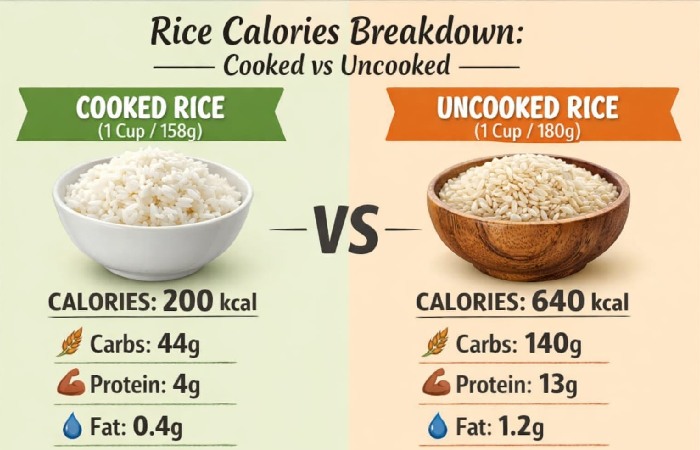
Understanding the difference between cooked and uncooked rice calories is important for accurate portion control. Uncooked rice is more calorie-dense because it hasn’t absorbed water yet, while cooked rice expands and contains more volume with fewer calories per gram. For example, 100 grams of raw rice may seem small, but it turns into a much larger portion after cooking. Calorie counts can vary widely depending on how the rice is measured.
| Rice Type | Quantity | Calories (Approx.) | Key Difference |
| White Rice | 100g Uncooked | 350–365 kcal | Highly concentrated, no water content |
| White Rice | 100g Cooked | 120–130 kcal | Absorbs water, lower calorie density |
| Brown Rice | 100g Uncooked | 360–370 kcal | Dense, high in fiber |
| Brown Rice | 100g Cooked | 110–120 kcal | More filling, less dense after cooking |
| Basmati Rice | 100g Uncooked | 350–360 kcal | Aromatic, similar to white rice |
| Basmati Rice | 100g Cooked | 120–130 kcal | Expanded, lighter per serving |
Complete 100g Rice Nutrition Facts by Type
Understanding the nutritional profile of 100g of rice by type helps you make better dietary choices based on your health goals. While most rice varieties provide similar calories, their fiber, vitamins, minerals, and antioxidant content can vary significantly. Choosing the right type of rice can support weight management, digestion, and overall health.
White Rice (100g Cooked)
Calories: 120–130 kcal
Carbohydrates: 28g
Protein: 2.5g
Fat: 0.2g
Fiber: 0.3g
Key Benefit: Easy to digest and a quick energy source
Brown Rice (100g Cooked)
Calories: 110–120 kcal
Carbohydrates: 23–25g
Protein: 2.5–3g
Fat: 0.8–1g
Fiber: 1.5–2g
Key Benefit: High fiber, keeps you full longer
Basmati Rice (100g Cooked)
Calories: 120–130 kcal
Carbohydrates: 25–28g
Protein: 2–3g
Fat: 0.3g
Fiber: 0.5–1g
Key Benefit: Lower glycemic index than regular white rice
Jasmine Rice (100g Cooked)
Calories: 130 kcal
Carbohydrates: 28g
Protein: 2–3g
Fat: 0.3g
Fiber: 0.4g
Key Benefit: Soft texture and aromatic flavor
Red Rice (100g Cooked)
Calories: 110–120 kcal
Carbohydrates: 23–25g
Protein: 2–3g
Fat: 0.8g
Fiber: 1.5–2g
Key Benefit: Rich in antioxidants and minerals
Black Rice (100g Cooked)
Calories: 120–140 kcal
Carbohydrates: 25–28g
Protein: 3–4g
Fat: 0.5–1g
Fiber: 2–3g
Key Benefit: High in antioxidants (anthocyanins)
Rice Calorie Count for Different Serving Sizes
Understanding how rice calories change with serving size is key to managing your daily intake. Even though rice itself isn’t very high in calories per serving, the portions can quickly add up—especially since it’s easy to eat more than one serving. Measuring your rice properly (by bowl, cup, or grams) helps you stay within your calorie goals while still enjoying your meals.
| Serving Size | Quantity (Cooked Rice) | Calories (Approx.) |
| Small bowl | 100 g | 120–130 kcal |
| Medium bowl | 150 g | 180–200 kcal |
| Large bowl | 200 g | 240–260 kcal |
| 1 cup | ~158 g | 200–210 kcal |
| 2 cups | ~316 g | 400–420 kcal |
| 1 tablespoon | ~15 g | 18–20 kcal |
| 1 plate (typical meal) | 250–300 g | 300–390 kcal |
How Many Calories Are in 1 Bowl of Rice?
A single bowl of cooked rice typically contains around 180 to 250 calories, depending on the portion size and the type of rice used. A standard medium bowl (about 150–180 grams) of plain white rice usually provides 200–220 calories. While rice is a good source of energy due to its carbohydrates, the total calorie count can increase if you add oil or butter, or if you prepare it as fried rice or biryani.
A small bowl (100g) of cooked rice has about 120–130 calories
A medium bowl (150–180g) contains around 200–220 calories
A large bowl (200g or more) can go up to 250–300+ calories
Brown rice has similar calories but more fiber and nutrients
Fried rice or biryani can double the calorie count due to oil and spices
Portion control is important if you’re managing weight
What Are the Nutritional Benefits of Rice?

Rice is a staple food that provides essential nutrients and energy. It is primarily rich in carbohydrates, making it an excellent fuel source for daily activities. Depending on the type, rice can also offer fiber, vitamins, and minerals that support digestion, heart health, and overall well-being. Whole grain varieties like brown, red, and black rice are especially beneficial due to their higher nutrient content.
| Nutrient/Benefit | How It Helps the Body |
| Carbohydrates | Main energy source for daily activities |
| Protein | Supports muscle repair and growth |
| Fiber (in whole rice) | Improves digestion and keeps you full longer |
| B Vitamins | Helps in metabolism and energy production |
| Magnesium | Supports nerve and muscle function |
| Iron | Helps in oxygen transport in the blood |
| Antioxidants | Protects cells from damage (in red/black rice) |
| Low Fat | Naturally low in fat, supports weight control |
5 Healthy Tips to Enjoy Your Rice Bowl
Enjoying a rice bowl can be both delicious and healthy when you make mindful choices. Rice provides energy, but how you prepare and serve it makes a big difference in its nutritional value. By balancing ingredients and controlling portions, you can turn a simple rice bowl into a wholesome, satisfying meal.
Control Your Portion Size
Stick to a small or medium bowl to avoid excess calorie intake while still getting enough energy.
Add Protein for Balance
Include foods like dal, eggs, chicken, or paneer to make your meal more filling and nutritious.
Load Up on Vegetables
Mix in vegetables like carrots, beans, spinach, or broccoli to boost fiber and vitamins.
Choose Healthier Rice Options
Opt for brown rice, red rice, or basmati rice for better nutrition and slower digestion.
Limit Oil and Heavy Add-ons
Avoid too much ghee, butter, or fried toppings to keep your rice bowl light and healthy.
Prices, in India, UK, USA, America, Africa, Canada, and Australia, of Calories in Rice – para, table
The price of rice (and, indirectly, the cost of calories in rice) varies widely across countries due to factors such as production, import costs, quality, and demand. While calories in rice remain roughly the same globally, the cost per kg (and per calorie) can differ significantly. Countries that produce rice locally, like India, usually have lower prices, while countries that import rice tend to have higher costs.
| Country/Region | Price per kg (Approx.) | Notes |
| India | ₹50 – ₹165 ($0.64–$2.02) | Cheapest due to high production |
| UK | $1.94 – $5.81 | Higher due to imports |
| USA | ~$4.60 | Among the highest globally |
| Canada | ~$3.09 | Moderate to high pricing |
| Australia | $1.38 – $3.47 | Varies by region and quality |
| Africa (avg.) | ~$1.5 – $3.0 | Depends on imports/local supply |
| Global Average | ~$2.22 per kg | Across 79 countries |
Structure of Rice Explained
The structure of the rice grain consists of several layers, each playing a different role in nutrition and processing. Understanding this structure helps explain why some types of rice (such as brown rice) are more nutritious than others (such as white rice). When rice is milled and polished, certain outer layers are removed, which reduces its fiber and nutrient content.
Husk (Outer Layer)
The protective outer covering is detached during processing. It is indigestible and protects the grain from damage.
Bran Layer
A nutrient-rich layer containing fiber, vitamins (especially B vitamins), and minerals. This layer is retained in brown rice but removed in white rice.
Germ (Embryo)
The core of the grain that can sprout into a new plant. It is rich in healthy fats, antioxidants, and essential nutrients.
Endosperm
The largest part of the rice grain is mainly composed of carbohydrates (starch). It provides energy but contains fewer nutrients compared to bran and germ.
Role of Rice in Weight Management
Rice can play a positive role in weight management when consumed in the right amount and paired with a balanced diet. While it is often misunderstood as a “fattening” food, rice is simply a carbohydrate that provides energy. The key lies in portion control, choosing the right type of rice, and pairing it with protein and fiber-rich foods to keep you full and satisfied.
Provides Steady Energy
Rice supplies carbohydrates that fuel daily activities without causing fatigue when eaten in moderation.
Portion Control Is Crucial
Eating large quantities can increase calorie intake, so sticking to a small or medium bowl helps maintain a calorie deficit.
Whole Grain Options Improve Satiety
Brown, red, and black rice are higher in fiber, helping you feel full longer and reducing overeating.
Supports Balanced Meals
Combining rice with protein (dal, eggs, chicken) and vegetables creates a well-rounded, filling meal.
Low in Fat Naturally
Plain rice is low in fat; excess calories usually come from added oils, butter, or fried preparations.
Helps in Meal Planning
Rice is easy to measure and portion, making it useful for controlled diet plans.
Can Fit Any Diet
Whether you follow a traditional, vegetarian, or fitness diet, rice can be included with proper planning.
Rice Nutrition Facts: 100g of Complete Nutritional Guide
Understanding the nutrition facts of 100g of rice helps you make informed dietary choices. Rice is mainly a source of carbohydrates, providing quick energy for the body. While white rice is lower in fiber, whole grain options like brown rice offer more nutrients, including fiber, vitamins, and minerals. Knowing these values can help you better balance your meals, especially if you are managing weight or overall health.
| Nutrient | White Rice | Brown Rice |
| Calories | 120–130 kcal | 110–120 kcal |
| Carbohydrates | 28 g | 23–25 g |
| Protein | 2–2.5 g | 2.5–3 g |
| Fat | 0.2 g | 0.8–1 g |
| Fiber | 0.3 g | 1.5–2 g |
| Magnesium | Low | Moderate |
| B Vitamins | Present (lower) | Higher |
| Glycemic Index | High | Medium |
Conclusion
Rice is a staple food that provides essential energy through carbohydrates. On average, one cup of cooked rice contains around 200 calories, but this can vary depending on the type and preparation method.
Rather than eliminating rice from your diet, focus on portion control, healthier varieties, and balanced meals. When eaten wisely, rice can be part of a nutritious and healthy lifestyle.
FAQs
How many calories are in 1 bowl of rice?
About 200–220 calories for a medium bowl of cooked rice.
Is rice good for weight loss?
Yes, if eaten in moderate portions as part of balanced meals.
Which rice is healthiest?
Brown, red, and black rice are healthier due to higher fiber content.
Does rice increase belly fat?
Only if eaten in excess and with high-calorie foods.
Can I eat rice daily?
Yes, in controlled portions as part of a balanced diet.
Is brown rice better than white rice?
Yes, it has more fiber and nutrients.
How much rice should I eat per day?
Around 1–2 bowls, depending on your activity level.
Does rice raise blood sugar?
White rice can raise it quickly; brown rice is better.
Is rice high in calorie?
No, it has fewer calories than other grains.
Can people with diabetes eat rice?
Yes, but in small portions, preferably whole-grain varieties.