What Causes Jelly-Like Mucus in Stool?
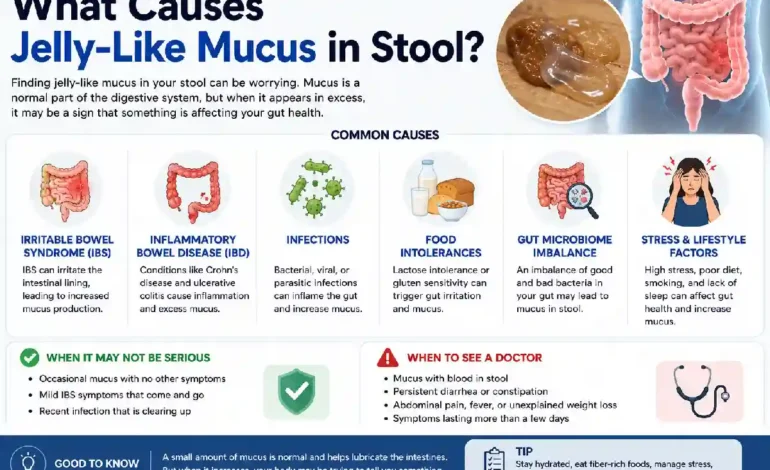
Jelly-like stool is a rather rare and sometimes worrying symptom. Most commonly, a little amount of mucus in stool is absolutely normal because your intestinal tract produces it in order to lubricate your stool. However, large amounts of mucus may indicate a certain condition.
What Is Mucus in Stool?
Mucus is a jelly-like substance produced by your intestinal tract in order to lubricate the movement of stool and to protect the intestinal walls from bacteria. Some amount of clear mucus is absolutely normal.
What Causes Jelly-Like Mucus in Stool
Constipation
Constipation can irritate your intestines and cause increased production of mucus. Mucus is used as a tool for facilitating stool passage in case it stays in your colon.
Irritable Bowel Syndrome (IBS)
Irritable Bowel Syndrome is one of the most common diseases. It is characterized by abdominal pain, bloating, constipation or diarrhea, and mucus in your stool—patients suffering from IBS experience clear or white mucus rather frequently.
Infection
If you suffer from a bacterial, viral, or parasitic infection, it can cause inflammation of your intestines and additional production of mucus. This symptom usually appears along with diarrhea, abdominal pain, nausea, or fever.
Inflammatory Bowel Disease (IBD)
Crohn’s disease and ulcerative colitis can cause additional production of mucus. These diseases are often accompanied by such symptoms as abdominal pain, diarrhea, fatigue, weight loss, or the presence of blood in stool.
Diverticulitis
The inflammation of small pockets of your colon causes this condition. Along with mucus production, it can be accompanied by abdominal pain, fever, and changes in bowel habits.
Proctitis
Proctitis is an inflammation of your rectum. In addition to mucus production, this condition can appear along with abdominal pain, changes in bowel habits, and rectal discomfort.
Mucus in Stool and Inflammatory Bowel Disease
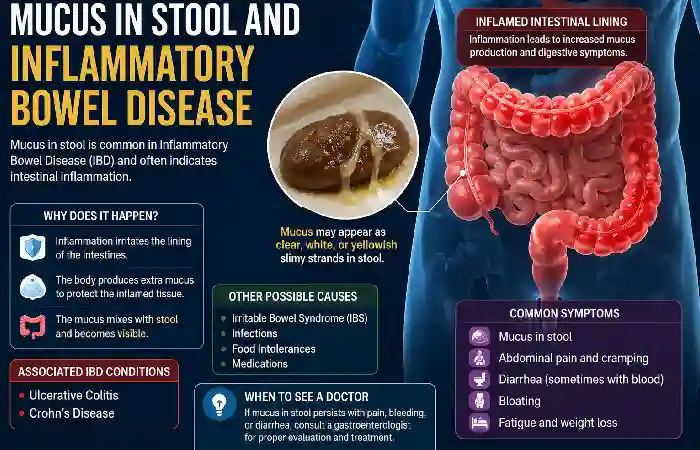
| Inflammatory Bowel Disease | How It May Relate to Mucus in Stool |
| Ulcerative Colitis | Mucus may occur with frequent bowel movements, diarrhea, abdominal pain, or blood in the stool. |
| Crohn’s Disease | Mucus can appear when inflammation affects the intestine or rectum, sometimes alongside diarrhea and cramping. |
| Proctitis | Inflammation of the rectum can cause mucus discharge, urgency, and discomfort during bowel movements. |
| When to seek care | Persistent mucus, blood in stool, unexplained weight loss, severe abdominal pain, or ongoing diarrhea should be evaluated by a healthcare professional. |
Is Jelly-Like Mucus in Your Stool a Sign of Cancer?
The appearance of mucus in your stool rarely indicates cancer. However, if this symptom persists, especially along with bloody stool, weight loss, persistent abdominal pain, or changes in stool, you should visit your doctor because colorectal cancer or colon polyps may be the reasons for excessive mucus production.
When to See a Doctor?
The following signs require consulting a healthcare specialist:
- Mucous discharge in stools
- Bloody stools
- Dark-colored stools
- Diarrhea/Constipation
- Pain in abdomen
- Loss of weight
- Fever with digestive problems
- Change in bowels’ habit persisting for several days
How Will the Cause Be Found Out?
Your healthcare provider may perform the following measures:
- The history of your medical experience
- Physical examination
- Diagnostic stool test
- Tests for blood
- Colonoscopy
- Imaging tests
The appropriate test to perform depends on your symptoms and risks.
Healthy Tips for Bowels
To support your digestive system, you may do the following:
- Drink enough water
- Eat foods rich in fiber
- Exercise regularly
- Avoid consuming highly processed foods
- Manage your stress levels
- Follow the treatment regimen if there are disorders of the digestive tract
Such tips could help avoid irritation of the digestive system and make bowel movements normal.
What Can Be Done at Home?
If there are insignificant amounts of mucus without any other symptoms, you may try the following:
- Consume enough liquid.
- Eat enough fiber and increase its quantity gradually if necessary.
- Do not strain to defecate.
- Take notes of the foods that cause symptoms.
- Check if mucus disappears within several days.
Mucus in Stool With Blood or Abdominal Pain
| Symptom | Possible Concern | What to Do |
| Mucus with a small amount of blood | Hemorrhoids, infection, or bowel inflammation | Monitor and consult a doctor if it continues |
| Mucus with severe abdominal pain | Infection, inflammatory bowel disease, or other intestinal problems | Seek prompt medical evaluation |
| Frequent mucus with diarrhea | Gastrointestinal infection or IBS | Stay hydrated and contact a healthcare professional if persistent |
| Black or tarry stool | Possible bleeding higher in the digestive tract | Seek urgent medical attention |
| Heavy bleeding, dizziness, or weakness | Significant gastrointestinal bleeding | Seek emergency medical care |
Additional Factors That Can Cause Mucus in Stool
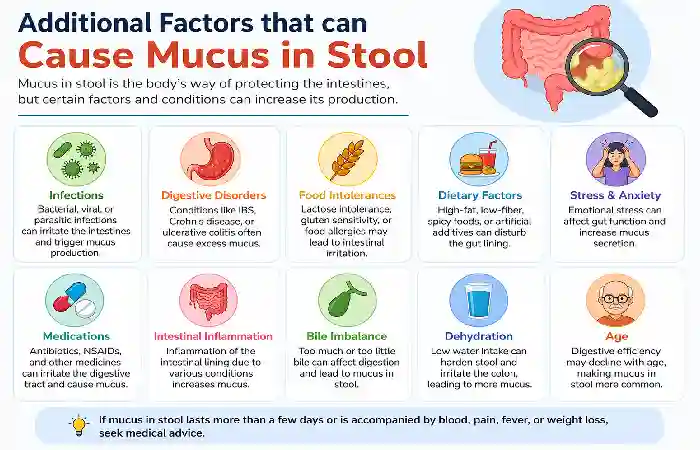
The formation of gelatinous mucus might be caused by some transient changes in digestion. The effects on digestion can be caused by diet, stress factors, medications, and alterations in bowel habits.
Changes in Diet
Transient changes in diet or fast consumption of fiber can affect the process of defecation. Some kinds of foods are inappropriate for our body and can cause the development of various digestive disorders, such as mucus formation, bloating, or loose stools.
It might be helpful to monitor one’s diet and symptoms in a food journal. It is recommended not to exclude major kinds of products from the diet without consulting specialists first.
Stress and Digestive Disorders
Stress affects the connection between the gut and brain and can aggravate the symptoms of irritable bowel syndrome. High-stress patients can have alterations in bowel habits, abdominal pain, diarrhea, constipation, or mucus.
Physical activity, adequate sleep, relaxation techniques, and sticking to a schedule might help in coping with digestive problems.
Medications
Some kinds of drugs can lead to alterations in bowel habits and digestive irritation. It is recommended to consult specialists prior to quitting drugs or supplements in case of mucus formation during their use.
Note Additional Symptoms
The presence of mucus along with some other symptoms might indicate a more serious disease. In case of mucus, diarrhea, constipation, abdominal pain, bloody stools, fever, or unexplained weight loss, all of those symptoms should be monitored.
A one-time occurrence of this symptom is not dangerous; however, continuous manifestation or its intensification requires seeking a doctor’s advice. Blood loss from the anus, severe abdominal pain, frequent vomiting, fatigue, or dehydration require medical assistance.
Frequently Asked Questions
Is it normal to have mucus in stool?
Yes, it is, as this type of mucus serves as a natural lubricant for intestines and stools.
Does dehydration lead to mucus in stool?
No; however, mucus may appear due to constipation caused by dehydration, and it may be one of the triggers.
Is mucus in stool always a sign of something serious?
No, there are a lot of other reasons for this condition, and mucus in combination with pain or blood is the only thing that necessarily needs to be checked by a doctor.
Is it normal to have mucus in stool which is jelly-like?
This type of mucus does not appear out of nowhere, and the presence of clear mucus is quite normal. However, too much mucus means that there is irritation or inflammation in your body.
Can constipation cause jelly-like mucus in stool?
Yes, this symptom may appear due to constipation.
Does IBS cause mucus in stool?
Yes, IBS may cause whitish or clear mucus in stools, especially in cases of abdominal cramps and changes in bowel habits.
Is mucus in stool a sign of cancer?
No, most of the time it has nothing to do with cancer. Mucus together with blood, changes in bowel habits, and unexpected weight loss should be checked by a doctor.
Conclusion
Thus, the reasons for jelly-like mucus in stools may include IBS, constipation, infections in the intestines, inflammatory bowel disease, diverticulitis, and other disorders. A normal amount of mucus in stools is nothing to worry about; however, its excess should be carefully checked.