How Long Does Food Poisoning Last? Symptoms, Recovery and Treatment
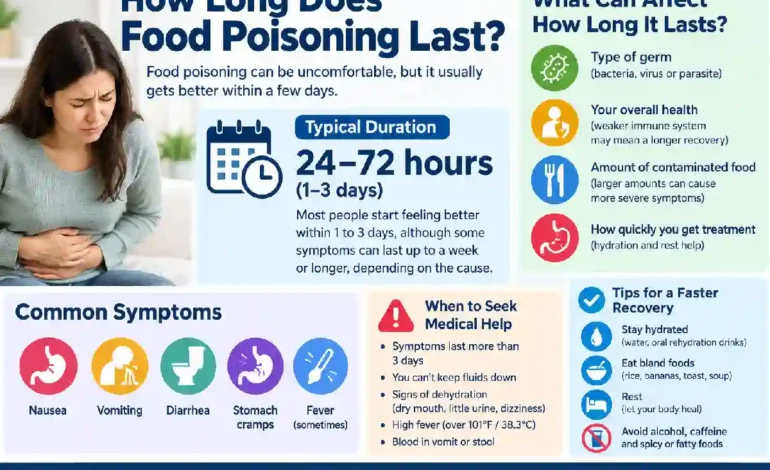
A case of food poisoning may be very unpleasant and include such symptoms as nausea, vomiting, diarrhea, abdominal cramps, and weakness. All of them may develop very quickly and without any understanding of how long your condition will last.
In many cases, food poisoning goes away in several hours to days, but typically uncomplicated food poisoning takes around one week to resolve completely.
The duration varies depending on the organism, toxin, or contaminant causing food poisoning. In some cases, the condition clears up within 24 hours, and in other cases, the symptoms can persist for several days or more. This article describes the usual duration of food poisoning, expected symptoms, ways to get better, and when you need to see a doctor.
Important: The content of this article is general health information and is not a substitute for medical advice.
What Is Food Poisoning?
Food poisoning or foodborne illness is a condition that occurs due to consuming food or drink contaminated with harmful organisms or toxins. The major causes of food poisoning are: • bacteria • viruses • parasites • toxins produced by bacteria
Common causes include:
- Bacteria
- Viruses
- Parasites
- Toxins produced by bacteria
Common germs associated with foodborne illness include:
- Salmonella
- Campylobacter
- Certain strains of E. coli
- Norovirus
- Staphylococcus aureus
- Clostridium perfringens
- Listeria
- Cyclospora
Duration of illness and symptoms depend upon the type of disease to a great extent.
How long does Food Poisoning Likely cause an Illness To Last?
There is not a simple answer since food poisoning means different diseases.
In the majority of cases:
- Toxin-related symptoms: Less than 24 hours.
- Food poisoning: Symptoms subside in a couple of days.
- Uncomplicated cases: Duration of symptoms lasts for a week or less.
- Bacterial or parasitic infection: It is sometimes longer than mentioned above.
According to the CDC, symptoms can last from a few hours to several days, based on the organism responsible for the illness.
A Simple Timeline
| Duration | What It May Mean |
| Less than 24 hours | Some toxin-related food poisoning |
| 1–3 days | Many mild foodborne illnesses |
| Several days | Common with several bacterial or viral infections |
| Up to a week | Many people recover during this period. |
| More than a week | May require medical evaluation, depending on symptoms |
How Quickly Does Food Poisoning Start?
Symptoms may not always appear soon after the consumption of contaminated food.
Symptoms, depending on the reason, may appear:
- After a few hours
- One or two days later
- A few days later
- Sometimes even much later
According to the CDC, the cause of being ill is not always the last food consumed. Some kinds of foodborne illnesses may appear several days later.
Symptoms of Food Poisoning
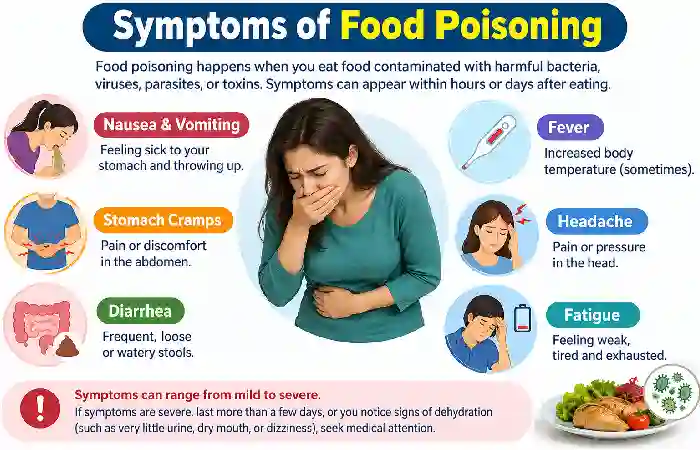
Food poisoning is not the same from one person to another.
Symptoms usually include:
- Diarrhea
- Nausea
- Vomiting
- Abdominal cramping
- Abdominal pain
- Fever
- Weakness
- Loss of appetite
Some people may experience mostly vomiting, while others will experience diarrhea and abdominal cramps.
How Long Does Diarrhea Last After Food Poisoning?
Even when the nausea and vomiting have stopped, diarrhea can persist.
Usually, the symptoms of diarrhea tend to get better over the period of a few days. However, it depends on the cause of the infection and can vary.
NHS recommends that the period when diarrhea occurs because of vomiting illnesses lasts about 5 to 7 days, but for each individual it can take a different amount of time.
If the diarrhea continues for several days, the following issues should be considered:
- Hydration
- Frequency of bowel movements
- The presence of blood in the stool
- Fever
- Severe abdominal pain
The problems that occur with persistent diarrhea include dehydration.
Timeline for Different Types of Food Poisoning Depending on the Reason for Infection
The various bacteria cause the various periods of recovery.
Staph Food Poisoning
The pathogens of Staphylococcus aureus produce toxins that cause the quick appearance of symptoms.
They include:
- Nausea
- Vomiting
- Abdominal cramps
- Diarrhea
The symptoms usually appear in 30 minutes to 8 hours and last up to 24 hours.
Clostridium perfringens
Clostridium perfringens infection is characterized by:
- Diarrhea
- Stomach cramps
It usually appears suddenly and within 6 to 24 hours.
Salmonella
Salmonella causes:
- Diarrhea
- Fever
- Stomach cramps
- Vomiting
It may take between 6 hours and 6 days for symptoms to develop.
Campylobacter
Campylobacter may cause:
- Diarrhea
- Fever
- Stomach cramps
The onset of symptoms usually takes place within 2 to 5 days.
- coli
Some types of E. coli may cause:
- Severe stomach cramps
- Diarrhea
- Bloody diarrhea
- Vomiting
Symptoms may develop after 3 to 4 days, according to CDC data.
Norovirus
Norovirus causes:
- Vomiting
- Diarrhea
- Nausea
- Stomach pain
It takes between 12 and 48 hours for symptoms to appear.
Cyclospora
Cyclospora is a parasite that may cause:
- Watery diarrhea
- Stomach cramps
- Bloating
- Gas
- Nausea
- Fatigue
- Weight loss
The onset of symptoms may be around 1 week after exposure.
What Affects How Long Food Poisoning Lasts?
Several issues can affect recovery:
- Cause of the Illness
This factor is very important.
Illness caused by toxins can be recovered from in just a few hours, while certain infections might last several days.
- Your General Health
Healthier individuals can recover faster from mild cases of food poisoning.
However, an illness can be severe in:
- Children
- Elderly
- Pregnant women
- Individuals with a weak immune system
- Individuals with certain medical conditions
- Dehydration
Vomiting and diarrhea lead to fluid loss.
In case of dehydration, you might experience:
- Weakness
- Dizziness
- Sudden thirst
- Tiredness
Severe dehydration can affect your recovery process.
- Severity of the Infection
While some infections may cause mild symptoms, others can affect your digestive system in a significant way.
Even individuals exposed to the same bacteria might have different levels of infection severity.
What Are the Signs That You Are Recovering?
It might be possible to detect the following signs of recovery:
- Less vomiting
- Less nausea
- Fewer bowel movements
- Decreased stomach pains
- Greater appetite
- Increased energy
The recovery process can take time.
For example, the process of vomiting might stop while mild diarrhea lasts for several days.
When Should You See a Doctor?
Many cases of food poisoning do not need to seek medical treatment.
However, the CDC recommends consulting a doctor if you have serious symptoms.
It is advisable to contact a medical professional if you have:
- Diarrhea with blood in it
- Diarrhea lasting more than three days
- Fever above 102°F (approx. 38.9°C)
- Vomiting to the point that you cannot retain fluids
- Dehydration
Signs of dehydration can include:
- Reduced urination
- Dry mouth or throat
- Dizziness when standing up
- Extreme thirst
If any of these symptoms are present, you need to visit a doctor.
When Does Food Poisoning Require Immediate Attention?
Immediate medical help will be needed in case of serious symptoms.
These symptoms may include:
- Serious dehydration
- Confusion
- Pain in the abdomen that is severe or worsening
- Vomiting blood
- Bleeding
- Unconsciousness
Children, older people, or others considered at risk may need medical advice sooner.
How to Avoid Dehydration
Fluid replacement is another important step in getting rid of food poisoning.
Fluids should be replaced constantly.
More fluid may be required because of the following conditions:
- Dehydration
- Vomiting
- Raised body temperature
Children can get dehydrated very easily, so special care should be taken with them.
Is Food Poisoning Contagious?
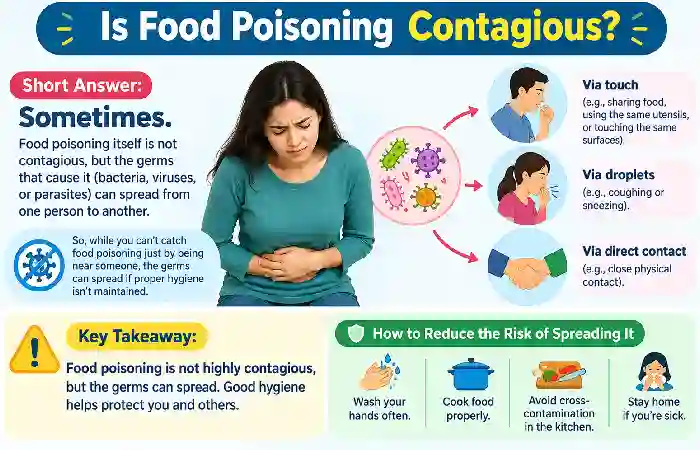
Sometimes.
It depends on the cause of this disease.
There are some infectious diseases that are contagious, for instance, norovirus.
It is necessary to maintain personal hygiene in order not to infect other people.
It is crucial to wash your hands constantly with soap and water, particularly after going to the toilet and before cooking meals.
According to NHS recommendations about the treatment of vomiting and diarrhea, it is advisable not to cook food for other people and to maintain hygiene.
How to Prevent Food Poisoning
These procedures will go a long way in reducing possible dangers.
Wash Your Hands
It is necessary in the following cases:
- while preparing food
- while eating
- while handling raw meat
- after using the restroom
Food Cooking Procedures
Ensure that all meats, fish, poultry, and other foods are properly cooked.
Apply proper food safety regulations.
Food Safety Procedures for Storing Foods
Store your foods in a safe environment.
Avoid leaving your food exposed for long periods.
Preventing Cross-Contamination
Ensure that your raw foods are separate from your ready foods.
Cleaning:
- cutting boards
- serrated knives
- countertops
- kitchen tools
Food Recall Regulations
In case of a food recall order, follow the instructions.
Final Thoughts
Duration of Symptoms in Food Poisoning
In some instances, the symptoms will be resolved after a few days. In any case, most cases of food poisoning resolve themselves within a week. However, symptoms from toxin-based food poisoning will resolve quickly, even before 24 hours, while bacteria- and parasite-based food poisonings will take time.
The first step in treating the condition is to ensure that you avoid becoming dehydrated. Drink plenty of fluids, get proper rest, and gradually start eating your regular foods again if you feel ready.
Take your symptoms seriously. Symptoms like blood-stained stools, continuous diarrhea, fever, vomiting, and signs of dehydration all indicate that you need medical attention.
When in doubt about whether you have food poisoning or some other illness, the best action is to consult a health care provider.