Features, Benefits, and Functionality of Automated Fitness Management System
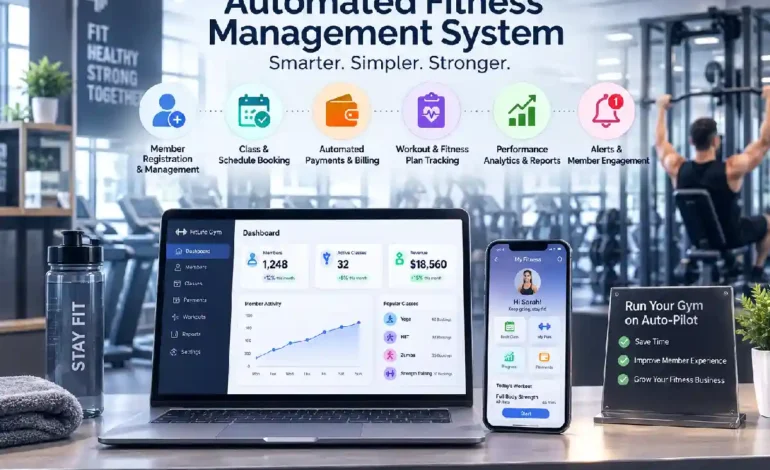
Running a gym or any other fitness facility involves more than just teaching people some exercises. You have to manage the membership, the schedules, payments, booking, customer inquiries, attendance, and many other things. Handling all these tasks manually might make even the most trivial things take a lot of your time.
Using an automated fitness management system, you will be able to perform many of your routine tasks within a single piece of software. Instead of relying on spreadsheets, paper documents, calendars, and payment services to keep records of your daily activities, you can use software.
The point is not in making your work in the gym automated but in automating your daily routine administrative tasks so you would be able to spend more time working with clients.
What Is an Automated Fitness Management System?
An automated fitness management system is a piece of software designed to assist gyms, fitness studios, personal trainers, wellness centers, and any other businesses in organizing their routine activities.
Depending on the system, an automated fitness management system will allow you to manage your memberships, attendance, booking, scheduling, communication, workouts, and generate reports.
It is important that the system is automated because the software will perform certain routine actions without repeating them manually.
If a membership is about to expire, the system will inform you about that. When a client books a class, the system will update the schedule. When the payment is made, the system will update the client’s profile.
Common Functions
| Function | What it can help manage |
| Membership management | Member profiles, plans and renewals |
| Attendance | Check-ins and attendance history |
| Scheduling | Classes, trainers and appointments |
| Payments | Fees, invoices and recurring payments |
| Communication | Reminders, notifications and messages |
| Workout tracking | Exercise plans and progress |
| Reporting | Business and member data |
| Access control | Gym entry and membership status |
These features may differ between solutions; therefore, fitness businesses should compare platforms considering their needs specifically.
How Does an Automated Fitness Management System Function?
Generally, all platforms function using a central dashboard with all the necessary information available.
The gym may create a member profile with details like their membership plan, contact information, payment status, and attendance record. After that, various functions may be performed.
Let’s assume a member has signed up for a three-month membership plan. Information regarding the membership plan is added, payment is collected, and the expiration date is registered. As the expiration date approaches, a reminder about it may be automatically sent.
The staff member will not have to add a new entry to the spreadsheet or keep this information manually. It is the biggest advantage of automation: various minor administrative actions may be performed in the background.
Important Features of Fitness Management Software
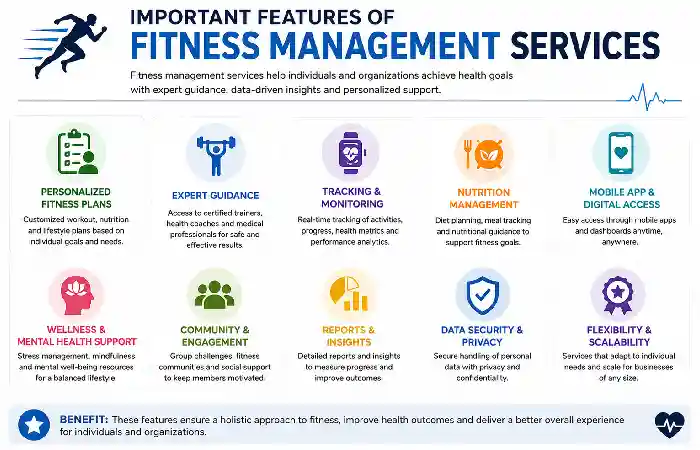
There may be lots of features in a helpful system. Still, each gym doesn’t need all of them.
Member Management
Member management is normally the heart of the fitness software.
Gyms may maintain digital files of their clients instead of using paper documents or multiple spreadsheets.
The information may include:
- Member name and contact details
- Type of membership
- Starting and ending dates
- Payment status
- Attendance
- Trainer assigned
- Class bookings
- Additional notes and preferences
Keeping the information in one place may make managing the client’s account much easier for the staff.
Attendance Tracking
Attendance tracking allows gyms to get a clear picture of how their clients use their services.
Depending on the particular solution, check-ins may be conducted using a mobile application, QR code, access card, biometric device, or any other way.
Tracking attendance may also reveal which clients have stopped coming.
Gyms may then send a friendly message to the inactive member asking about the situation rather than waiting for the cancellation of the membership.
Scheduling and Class Management
Fitness businesses often hold many different classes and individual appointments during the day.
An automated system helps organize:
- Group classes
- Individual training sessions
- Trainer schedule
- Rooms booking
- Member reservations
- Cancellations
- Waiting lists
Moreover, some software allows members to book the training session themselves using a website or mobile application.
Thus, the number of communications with the staff may be reduced.
Benefits for Gyms and Fitness Centers
While there might be many features that are seen as the main benefits of automation, it is mostly about the number of redundant tasks that can be done automatically.
Saves Administrative Time
There is no need for staff to update every membership, payment, booking, or reminder manually anymore.
Automation can do all routine actions while employees will be able to work with clients.
Reduces Manual Errors
Mistakes may happen due to copying information from one spreadsheet to another or due to entering the same information in different systems several times.
A centralized system may eliminate some of these mistakes due to having all information in one place.
Improves Member Experience
Members always appreciate simplicity.
It becomes possible to book a class, receive a reminder, and check the status of payments or a workout plan without visiting the gym personally.
Helps With Retention
It is crucial for any fitness business to retain its members.
Attendance information and automatic communications help to find those members who start losing interest.
Sometimes it might be enough to send a prompt email or call to convince a member to come back to the gym.
Provides Better Business Visibility
Reports might show those tendencies that are hard to see when information is manually stored.
It becomes possible for owners to monitor:
- Active memberships
- New registrations
- Cancellations
- Income
- Attendance
- Popular classes
- Trainer performance
Automatic Member Management
Manually managing hundreds or thousands of members can be difficult.
Automation makes such processes simpler.
For example, the system can:
- Register a new member.
- Assign the chosen membership plan.
- Register payment.
- Specify membership period.
- Send confirmation.
- Send renewal reminder.
- Update member account after renewing the membership.
It is better to use automation when it can perform predictable tasks, while employees will be responsible for solving situations that require their judgment.
Workouts and Progress Tracking
Some fitness management platforms offer not only business administration tools but also training ones.
Depending on the software, trainers might create a workout program and record clients’ progress.
Such information may include:
- Exercises
- Sets and repetitions
- Training frequency
- Body measurements
- Fitness goals
- Progress notes
- Performance records
Scheduling and Class Management
Think about a studio offering yoga, strength training, cycling, and mobility classes every single day.
With no centralized software, scheduling could require booking through phone calls, messaging, spreadsheets, and multiple calendars.
A fitness management solution will organize all those schedules in one place.
Members will be able to view available classes and book classes based on the system’s logic. Staff will have access to attendance figures and class cancellation management.
| Scheduling task | Possible automation |
| Class booking | Digital reservations |
| Appointment reminders | Automatic notifications |
| Cancellations | Schedule updates |
| Waiting lists | Automatic position updates |
| Trainer schedules | Centralized availability |
| Capacity | Booking limits |
It can be particularly useful for studios where class sizes are limited.
Billing and Payment Automation
Payment processing takes up a surprisingly large amount of staff time.
Some fitness management solutions come with such features as:
- Membership billing
- Recurring payments
- Invoicing
- Reminders about payments due
- Notification about renewal
- Payment history
Properly set up recurring payments will eliminate the need for contacting members manually before each payment due date.
Yet, companies have to analyze every failed payment and suspicious transaction, rather than expecting every automated payment to go through.
Communication With Members
Another area where automation can prove useful is communication.
A fitness company can use automated messaging for:
- New member welcoming messages
- Appointment reminders
- Class booking confirmations
- Membership renewal reminders
- Payment reminders
- Birthday wishes
- Follow-up on inactive members
Too much automated communication can irritate members. The point of automation is to facilitate communication, not turn it into spamming.
Choosing the Fitness Management Software
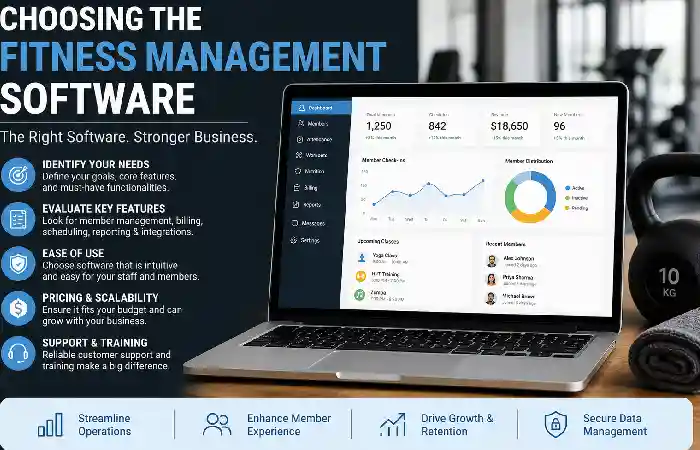
The choice of software should be based on business challenges.
Prior to buying the platform, consider the following factors:
- Company Size
The personal training studio will require fewer functionalities compared to a large chain.
- Necessary Functionality
Compile the list of necessary functions before proceeding to comparison.
- User-friendliness
Having lots of functionality is useless if people have trouble using the software.
- Customer Interface
The possibility for customers to book classes, make payments, see the schedule, and contact trainers from a customer-facing side is essential.
- Integrations
Does the software work with the accounting, payment, marketing, access control, or communication software that your business uses?
- Security
Personal training businesses process personal and financial information of the customers, and possibly some medical data as well. Make sure you review the provider’s security and privacy practices carefully.
- The Cost
Think about not just the monthly subscription fee, but about set-up costs, hardware, payment processing fees, additional users, integration, and support.
Automation vs Human Assistance
Automation should complement good customer service rather than replace it.
While the customers won’t mind receiving an automated message confirming the booking, they may prefer talking to a human if there is an issue with billing or adjustment of the training program.
A good fitness business uses both.
Automation takes care of the repetition. Humans take care of relationships.
And these two things matter a lot because fitness is ultimately a human-centered business.
Frequently Asked Questions
What is an automated fitness management system?
It is a type of software that allows fitness centers to manage their activities related to memberships, scheduling, attendance, payment, communication, reporting, and automating repetitive tasks.
Does the system allow tracking attendance?
Yes, most of the available systems have attendance tracking options that can be done by check-ins, QR codes, apps, cards, or access control systems.
Does it help with managing the gym membership?
Managing memberships is one of the common uses of the software since it allows tracking plans, payments, renewal dates, members’ information, and attendance.
Can members book classes independently?
There is no clear answer, as it depends on the software; some of them allow doing that, but some do not.
Is it worth investing in for a small gym?
Sure, small businesses can automate routine processes such as management of appointments, payments, and communication with members without involving much administrative personnel.
Is automated fitness management software expensive?
The prices for such software vary greatly based on the vendor, number of members, features, integration possibilities, and required hardware. You should calculate the total cost instead of just looking at the monthly subscription price.
Conclusion
The automated fitness management software can simplify the majority of routine processes that are involved in running a gym, fitness studio, or personal training business. Attendance, membership records, scheduling, payments, communication, and reporting will become easier to manage using one platform.
Nevertheless, automation does not replace personal trainers and customer support in any way. The best fitness businesses are those that use technologies to simplify the process of their operations while maintaining personal attention to their members.
When you choose software, take into account the needed features, the user experience of staff and members, security, integrations, scalability, and cost. A simple system that is enjoyed by users might be more effective than one that has too many features that are never used.