Tai Chi Walking for Seniors: A Practical Guide to Balance and Mobility
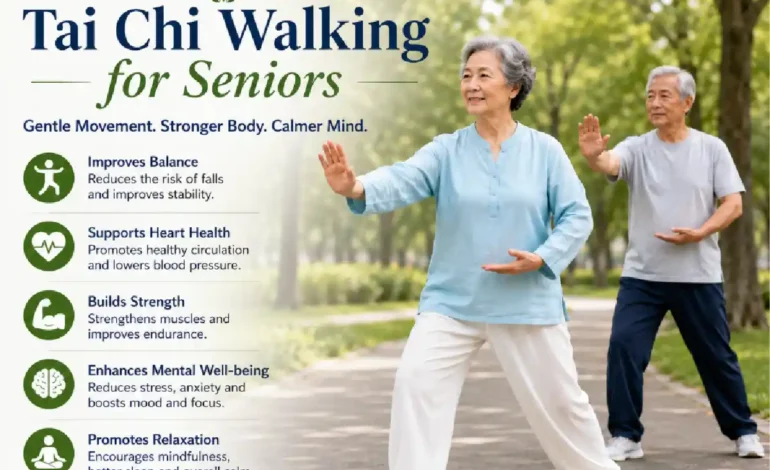
As the years go by, staying sure-footed becomes a top priority. Simple daily activities like navigating a high kerb, crossing an uneven lawn, or walking down a flight of stairs require a level of physical feedback that we often take for granted in our younger years. While traditional brisk walking is fantastic for heart health, fast-paced strides don’t always leave room for thoughtful control. When speed takes over, it is easy to rely on momentum rather than muscle engagement and precise balance. For older adults looking for a gentler, more deliberate way to stay mobile, tai chi walking for seniors offers a deeply effective low-impact solution.
Derived from traditional martial arts movements, this practice breaks down the physical mechanics of a single step into slow, controlled components. Instead of falling forward from one foot to the next, you learn to shift your body weight with complete awareness, keeping your knees soft and your torso balanced. It turns ordinary walking into a functional stability exercise that protects vulnerable joints while building deep core and leg strength. Whether you are recovering from a period of inactivity or simply looking to improve your balance, learning this gentle technique can completely change how you move through the world.
Understanding the Core Principles of Tai Chi Walking
To understand why this method works so well, it helps to look at how we normally move. Standard walking relies heavily on forward momentum. You lean your chest slightly forward, swing a leg out, and drop onto your heel, trusting that your front leg will catch you before you fall. When your reaction speed and joint stability are sharp, this happens seamlessly. However, if your balance wavers halfway through a rapid step, recovering your footing can be difficult because your weight is already committed to the air.
This is precisely where tai chi walking for seniors changes the equation. In this practice, every step is split into clear, deliberate phases. You never place weight on a foot until it is fully planted on the ground. Practitioners call this concept distinguishing between “full” and “empty.” The supporting leg carries 100% of your body weight (making it full), while the stepping leg extends forward without carrying any weight at all (making it empty).
Because your weight remains rooted over your back leg during the extension phase, you retain total control over your movement. If you feel unsteady at any point while reaching forward, you can easily pull your front foot back without losing your footing. Only when the front foot is firmly anchored do you slowly roll your weight forward, turning the front leg into the new supporting pillar. This complete control removes the rush from walking and drastically reduces the risk of stumbles.
Key Benefits of Tai Chi Walking for Seniors
Integrating slow, mindful steps into your weekly routine provides widespread benefits that support daily independence. While every individual responds at their own pace, regular practice reinforces the physical systems responsible for upright mobility.
Improved Functional Balance and Spatial Awareness
Balance relies on a constant conversation between your inner ear, your eyes, and sensory receptors in your feet and joints. By forcing your body to balance on one leg during each slow transition, tai chi walking for seniors sharpens these sensory feedback loops. The small stabilizer muscles around your ankles, knees, and hips are forced to make tiny, continuous micro-adjustments. Over time, this builds spatial awareness—often called proprioception—allowing you to react more instinctively when walking over uneven terrain.
Low-Impact Joint Conditioning
Hard pavements transmit shock straight up through the heels into the knees, hips, and lower back. Because Tai Chi movement stresses a slow, rolling transition from heel to toe with slightly bent knees, it acts as a natural shock-absorption system. The surrounding muscles absorb the energy of the step rather than the cartilage in your joints, keeping movement comfortable and fluid.
Deep Lower-Body Strength
Moving quickly allows momentum to do part of the work. Moving slowly forces your muscles to stay engaged for longer periods under continuous tension. Holding a soft, slightly flexed knee while transferring weight engages the quadriceps, hamstrings, gluteal muscles, and calves far more deeply than rapid strides. This functional leg strength is exactly what you need to rise comfortably from a deep armchair or climb steps without relying heavily on a handrail.
Mindful Focus and Stress Reduction
It is nearly impossible to worry about your to-do list when you are fully focused on the precise placement of your heel and the rhythm of your breath. This intense focus turns physical training into a moving meditation. The calm concentration required for tai chi walking for seniors lowers physical stress, eases muscle tension, and promotes a calm, grounded state of mind.
Step-by-Step Guide to Practicing Safely
To experience the full physical benefits, approach each step with patience. Find a quiet spot with smooth, clutter-free flooring before taking your practice outside. Work through these steps slowly, aiming for fluid motion rather than rigid positions.
1. Establishing the Rooted Stance
Stand upright with your feet hip-width apart, pointing straight ahead. Release any tension in your joints by allowing your knees to stay slightly soft rather than locked out straight. Drop your shoulders away from your ears and imagine a gentle pull at the crown of your head, lengthening your spine upwards. Let your arms rest comfortably by your sides or rest your palms lightly over your lower stomach to help monitor your breathing.
2. Shifting Weight and Isolating the Supporting Leg
Without leaning your upper body to the side, slowly transfer your weight into your right foot. Feel the entire sole of your right foot pressing evenly into the floor, becoming your solid pillar. As your weight pours into the right side, your left leg will naturally feel weightless, or empty. Your hips should remain level throughout this entire transition.
3. Executing the Empty Step
Peel your weightless left foot gently off the ground, lifting the heel first and then the toes. Extend your left leg straight forward at a comfortable length, making sure not to overreach. Touch down softly with your left heel. Remember: keep 100% of your body weight resting securely on your back right leg. The front heel should rest on the floor like a feather on water.
4. The Rolling Weight Transfer
Now that your front foot is properly positioned, slowly push off your back leg to shift your center of gravity forward. Flatten your left foot gradually, rolling smoothly from the heel through the arch and down to the toes. As your left leg takes on your weight, your rear right heel will naturally peel off the floor behind you, making your right leg empty.
5. Following Through
With your weight now fully rooted over your left foot, slide or lift your right foot forward until it meets your left ankle, pausing briefly in your starting posture. Check your posture, ensure your breathing remains deep and steady, and repeat the sequence by stepping empty with the right foot.
Tai Chi Walking vs. Standard Brisk Walking
Both forms of movement have a valid place in a balanced health routine, but they train the body in very different ways. Understanding these differences helps you decide when to use each method.
| Movement Feature | Standard Brisk Walking | Tai Chi Walking |
|---|---|---|
| Primary Physical Focus | Cardiovascular stamina and calorie expenditure | Balance, lower-body control, and joint stability |
| Weight Transfer Dynamic | Continuous, momentum-based forward movement | Deliberate, fully controlled weight transitions |
| Impact on Joints | Moderate impact through repeated heel strikes | Extremely low impact due to soft knee alignment |
| Average Pace | Moderate to fast (4 to 6 km/h) | Very slow, controlled, and rhythmically deliberate |
| Space Requirements | Requires open tracks, pavements, or treadmills | Fits easily in small hallways or living rooms |
A Safe 15-Minute Daily Beginner Routine
When starting out with tai chi walking for seniors, short daily practice sessions build better neurological pathways than long, exhausting sessions once a week. Aim for fifteen quiet minutes every day.
- Phase 1: Warm-Up (3 Minutes)
Stand comfortably near a wall or sturdy chair for support if needed. Slowly turn your upper body from side to side, letting your arms swing loosely around your waist like empty sleeves. Finish by rotating your ankles gently in small circles to release stiffness. - Phase 2: Straight-Line Walking (5 Minutes)
Pick a clear straight path of about 6 to 10 paces. Walk slowly forward using deliberate weight shifts. When you reach the end of your path, turn around by taking several small, circular steps rather than twisting on a single foot. Reset your posture and repeat. - Phase 3: Side-to-Side Weight Shifts (4 Minutes)
Stand with your feet slightly wider than hip-width apart. Without taking forward steps, slowly shift your weight onto your right leg, pause for three seconds, and then shift over to your left leg. This lateral training strengthens the side hip muscles critical for preventing sideways trips. - Phase 4: Cool-Down (3 Minutes)
Stand still with both feet flat on the ground. Inhale slowly through your nose while raising your hands gently to chest height, palms facing down. Exhale smoothly as you lower your hands back to your hips, settling your mind and body.
Safety Guidelines and Key Modifications
Creating a safe practice environment ensures you can focus entirely on your movement without worrying about hazards. A few simple preparations make a big difference.
Preparing Your Space
Always practice on smooth, level flooring. If you are training indoors, roll up loose rugs, clear away low furniture, and pick up any stray cords or pet toys. If you prefer practicing outdoors, choose a smooth concrete patio or a tightly mown grass garden rather than gravel or unpaved dirt paths. Make sure your area is well-lit.
Using Physical Support
If you experience balance issues or persistent lightheadedness, there is no need to practice unsupported in open space. Position yourself parallel to a long corridor wall so your fingertips can lightly graze the surface as you walk. Alternatively, set up two sturdy kitchen chairs on either side of your path to serve as reliable handholds.
Choosing the Right Footwear
Wear flat shoes with thin, flexible soles and good rubber grip. Avoid running shoes with thick, heavily cushioned foam soles, as they compress under weight and mute the sensory feedback your feet need to feel the ground clearly. Bare feet or non-slip socks on clean carpet can also work well.
Listening to Your Body
Never push through sharp joint pain, sudden dizziness, or shortness of breath. If you have severe joint degeneration, inner ear conditions, or advanced peripheral neuropathy, consult a physical therapist before beginning. They can help adjust your stride length and stance depth so that tai chi walking for seniors works safely within your current physical comfort zone.
Frequently Asked Questions
Is tai chi walking for seniors safe to practice every day?
Yes, practicing every day for 10 to 15 minutes is completely safe and encouraged. Because the movement is gentle and low-impact, daily practice builds strong motor habits and muscle memory without overworking your joints.
Can I practice this exercise in a small apartment?
Absolutely. One of the best things about this practice is that it requires very little space. A short hallway or a clear path across a living room rug provides more than enough room for a productive session.
Is tai chi walking for seniors a complete replacement for standard cardio?
No, it is meant to complement cardio rather than replace it completely. While this practice builds balance, postural alignment, and functional stability, it is ideal to pair it with low-impact cardiovascular activities like swimming, exercise cycling, or general walking.
What should I do if my legs feel tired during practice?
Muscle fatigue in the quadriceps is common when you first start moving slowly. If your legs begin to feel tired or shaky, stand up straight, shake out your legs, and rest. As your muscle endurance improves over time, standing for longer periods will become much easier.
Conclusion
Regaining confidence in your movement does not require strenuous workouts or complicated fitness equipment. By taking traditional walking mechanics and slowing them down, tai chi walking for seniors provides a practical, enjoyable way to protect your joints, build essential leg strength, and train your balance system. By focusing on smooth weight transfers, relaxed knees, and upright posture, you give your body the exact tools it needs to stay sure-footed and independent. Take it one slow, mindful step at a time, and let consistency do the rest.
Related Guides
Explore more useful resources related to this topic: